For the Love of Lieder

Growing up in Los Angeles, I didn’t know much about German Romantic poetry. I did read some Goethe and Heine (because I had excellent high school German teachers) but I didn’t exactly grasp the scope of that literary movement. And I couldn’t have guessed that those poems would change my life. (Mendelssohn portrait from Linda Hines’ blog)

But when I moved to Salzburg to study opera, I discovered that other singers had moved to Salzburg to study Lieder. They wanted to make a career of singing art songs, and they were there to study with the great German pianist, Hartmut Höll.

Professor Höll is an inspiring musician, famous for his recordings with Dietrich Fischer-Dieskau and Mitsuko Shirai and Renee Fleming.  And his music doesn’t sound like anybody else’s.  He has his own sound; his interpretations are always creative and original. The students at the Mozarteum had tremendous respect for him. They only wanted to show him their very best stuff. And to do that, they had to first understand the poems that the great composers had set to music.

Fortunately, poems were thick on the ground in Austria! People were always throwing around names like Eduard Mörike and Hermann von Gilm zu Rosenegg (which is a long name to throw around).  I found that I could absorb a great deal of information just by standing around and eavesdropping on conversations! That’s how I discovered the Heidelberg poets like Brentano, Arnim and Eichendorff.

There is a special pleasure in reading poetry in a second language. It feels mysterious, like cracking a secret code. You have to let the words linger a bit longer in your mouth to catch the full flavor, but it’s worth the wait. I was floored when I first read Nikolaus Lenau’s “Frühlingsblick” out loud. I was so… READ MORE.

Full post at www.icadenza.com

Conduct Yourself Like an Orchestra

If your life were a symphony, what would it sound like?

Imagine that you have your own invisible orchestra.  It follows you wherever you go, creating a symphonic soundtrack for your life. Which instruments accompany you as you walk down the street, complete a task, or talk to a friend?  (Orchestra map courtesy of BillieSilvey.com)

Everyone has a favorite instrument.  Before I studied opera, I played the saxophone in my high school jazz band. My sister plays the Celtic harp. My mother loves the sound of the violin.  I once had a dog who liked classical piano: he would snuggle up to the stereo speakers whenever a Chopin sonata came on the radio! Which instruments would you choose to play the music of your life?

Opera singers imitate orchestral sounds in the same way that instrumentalists try to capture the sound of the human voice.  Some vocal music is very instrumental in style. When I sing a coloratura passage, I deliberately use my voice like a flute or a clarinet. But my voice also has a brassy shine, which is why I love to sing with trumpets, French horns and trombones!

I once got to sing the soprano solo in Mahler’s fourth symphony with the Mozarteum University Symphony Orchestra. Standing on that stage was like riding a wave of sound, with rich colors and textures swirling all around me. It’s a wonderful feeling to float high above the orchestra and then dive down into all that sumptuous sound. Gustav Mahler, of course, was a legendary composer and a brilliant conductor; he knew how to write music for every instrument, including the voice, and his orchestration was perfect.

I would love to conduct my life the way Mahler conducted his orchestra. I’d like my Friday afternoon to have the power and beauty of the Resurrection Symphony! But unlike Gustav, I am NOT a genius when it comes to instrumentation.

Sometimes, in the middle of a conversation, I suddenly realize that I’m using way too much percussion. (Has that ever happened to you? You suddenly notice that you’re intimidating someone, just by being overly enthusiastic?) If I hear myself getting too intense, I cut the bass drum and cue the violins. If I’m complaining too much, I reduce the volume of my oboe. And if I’m getting shrill like an overblown flute, I give the solo line to the cello instead.  But if I find myself hiding in the back of the pit, avoiding what needs to be done, then I add back the brass.  It’s a good way to keep life in balance.

So if you’re feeling uncomfortable today, see if you can adjust your instrumentation. Be aware of your harmonic impact on other people. Aim for a rich and satisfying blend, what Lisa DuBois calls “the treble and bass of a balanced life.”  Orchestrate your to-do list and conduct your conversations.  Live a symphonic life!

Finding Your Own Tempo

What’s your tempo?

How fast are you moving today? How fast are you thinking? Are you in andante?  Allegro?  Molto agitato?

What are your tempo plans for this weekend? Are you hoping for a slow, luxurious adagio? Or something more exciting? Molto vivace?

When I lived in Italy, I found that my personal tempo was too fast for my neighborhood.  As an ambitious young opera singer, I would fly down the street, chasing after my professional goals. My neighbors would gaze at me in amusement. My speed was fine for the center of town, with the busy tourists and zooming motorbikes, but it didn’t match the slower pace of residential life.  In my piazza, people liked to drive quickly, but they preferred to live slowly.

But I was always bursting with energy.  I didn’t want to walk slowly, and I didn’t need a break after lunch. I didn’t want to wait in the long queue at the post office. I was even aggravated by my own voice, which was growing (slowly, leisurely, even languidly) into a more dramatic repertoire.

In my frustration, I went to consult with the great singing teacher, Maestro Sergio Bertocchi. “Why am I not developing more quickly?” I asked him. “Hai fretta,” he said simply. (You’re in a hurry.)  “The voice doesn’t like to be rushed. Never try to learn anything in a hurry. It will only slow you down.”  

Patience is a hard lesson to learn. (I have to keep learning it, over and over again, but I suppose that’s the nature of the lesson…) I must have slowed down a little bit, though, because when I returned to the United States, I was shocked by how fast everyone was going!

When I visited American universities, I was sad to see that so many young voice majors were stressed out!  They were rushing from class to class, juggling double majors, squeezing coachings in between after-school jobs.  They were so busy, and I wondered if they had enough time to practice.

To be a good musician, you need to have time to practice. It’s not just about learning the music.  It’s about forging your own identity as an artist.  You need to spend many hours in a quiet place, away from the noise and the bustle, so that you can hear your own music. You need to spend time in your own “artistic space.”

When I was an undergraduate in Salzburg, I spent many long Saturdays in the practice room. I would sing for hours and hours. And when I was too tired to sing, I would sit down and think about singing. My best friends were the other singers (and pianists) who were crazy enough to spend their weekends at school!  We listened to music, and we talked about music. We had time for music.

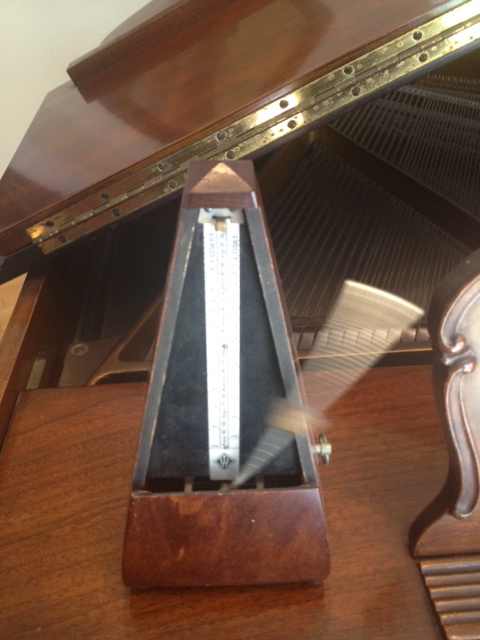
Of course, you can’t be a student forever.  These days, there are more demands on my time. But whenever I hear myself telling someone that I’m “too busy,” or that “I don’t have time,” I try to slow down and reset my inner metronome.

Life is like music, and it helps to be aware of your own rhythm. Listen for the beat. Does it match the music you want to hear? If not, you might want to adjust your tempo.

What Your Body Knows

My body knows how to sing. I have studied vocal technique for fifteen years, and I’ve studied with some legendary voice teachers. I feel so privileged to have worked with each one of them. And yet, almost every voice teacher I’ve known has given me the same rotten piece of advice:   “Forget what you learned before you came to me.”

This advice was given to me, over and over again, by well-meaning teachers who wanted to correct some issue in my vocal technique. No matter how many degrees I had earned or how many roles I had sung, they always wanted to start from the very beginning. They wanted to begin with a clean slate.

Since I am now a voice teacher, myself, I know exactly how they felt. When I meet an advanced student who is already an accomplished singer, but who has a bad habit that is holding her back, I wish I could eliminate the problem. I want to go back into her past and fix the bad habit before it started.  But that’s not how it works.

It is very hard to change a “muscle memory.” When you repeat an action over and over again, your brain learns to engage… READ MORE

Muscle map image courtesy of The Muscle Help Foundation

Full Post at iCadenza.com

Running Home

Do you like to run? How would you feel about running from Canada to Mexico?

Meet Norma Bastidas, ultra-marathoner and mother of two, who is running 2600 miles to raise awareness about violence and domestic abuse.

Norma left Vancouver on April 21st, and she ran past my house in Los Angeles two weeks ago. Today, she’s running through the Sonora Desert and she plans to arrive in her hometown of Mazatlan, Mexico on the 8th of July! You can follow her journey at: Running Home, A Journey to End Violence.

I am always inspired by people who do “impossible” things, so I felt very privileged to meet Norma. Her athletic career is nothing short of amazing: she has run ultra-marathons on all 7 continents and she’s also an accomplished mountaineer. She has run on all kinds of terrain, from the sands of Namibia to the ice of Antarctica. (How do you top that?)

But this journey is special.  “I wanted to do something really hard,” she told me. “And I believe in what I’m doing.”  She wants to put an end to violence.  Does that seem impossible?  Remember that this woman is running all the way from Canada to Mexico. There isn’t much that seems impossible to Norma.

When I heard she was coming to my house, I made sure to get her some fuel: multi-vitamins, L-glutamines, and lots of pasta! She was grateful for the dinner, but she was almost too excited to eat. Instead of focusing on her own amazing story, Norma kept asking me about my projects. She wanted to hear about my festival in Nepal, and my dreams of singing in Africa. She asked how I was using my music to inspire people.

Sitting on my couch on the 9th of June, Norma was absolutely glowing with happiness. (No one should look that beautiful after running every day for two months!) She couldn’t wait to tell me about her mission.

“Every time you decide to push the limits of what you think is possible, they get a little further,” she said. “But you have to be smart about it.   You don’t want to put yourself in danger for no reason. So I always ask myself: am I afraid because it’s really dangerous, or am I just afraid to fail? If it’s just my ego talking, that’s not a good enough reason not to try.”

I think she’s right.  It’s important to take risks sometimes. It’s not about winning a trophy or “being the best.”  It’s about pouring your life into something that matters.

You might not be able to run sixty miles in a day like Norma Bastidas.  But isn’t there something you’ve been wanting to do? Some dream you have given up because it feels impossible?

Michelangelo wrote, “the greatest danger for most of us is not that our aim is too high and we miss it, but that it is too low and we reach it.”

So where is your next “finish line?” Maybe you could go just a little bit farther? Re-think your own boundaries. Push the limits of possible.

Mission: Possible

It started when I was 19 years old. I was a college student, studying medieval literature, but I had a secret habit. Late at night, I would sneak into the basement of my dormitory to sing opera.

Singing gave me energy. Whenever I had to pull an all-nighter to study for a test or write a paper, I would go and practice first. If I sang for just one hour, I would have enough energy to stay up all night.

If I went for too many days without singing, I would get restless. Singing had become a physical need! I was literally hungry for music. And when I did sing, I felt a sensation of wild joy. It was a feeling that I couldn’t ignore.

So I ran off to Europe to become an opera singer. I left school and flew to Austria, where I sang my heart out on the stage of the Mozarteum in Salzburg. I was immediately accepted into a seven-year degree program in opera. That was the beginning of my adventure.

When I followed my bliss all the way to Salzburg, I had a very clear sense of mission. I dared to entertain the idea that God… Read More

Full Post at iCadenza

the White Nights of St Petersburg

Here in Los Angeles, the sun will set over the ocean at  precisely 8:02 PM this evening. I’m sure it will be spectacular.

But in St Petersburg, Russia, the sun will not set until just before midnight. When you are that far north, summer days never end. June is a magical time in St Petersburg, when nighttime only lasts a few hours, and the darkness isn’t very dark.

Back in June 2007, I got to experience the famous “White Nights” of St Petersburg. I was in Russia to compete in the XIII International Tchaikovsky Competition in Moscow, an unforgettable experience.

But since my father had been invited to St Petersburg as a  guest professor, I decided to go there first. After all, this was my chance to experience the Winter Palace, the Hermitage, and the Mariinsky Theatre. Like any musician preparing for a major competition, I would spend several hours a day practicing… but why stay home when I could just as easily practice my music in this glorious city?

Instead of just singing Tchaikovsky arias, I got inside them. I stood at the very place where Liza throws herself into the river Neva in the final act of Queen of Spades. I sang inside a Russian church. I practiced reading the Cyrillic alphabet as I walked around the city, slowly sounding out words like интернет (internet) and ресторан (restaurant).

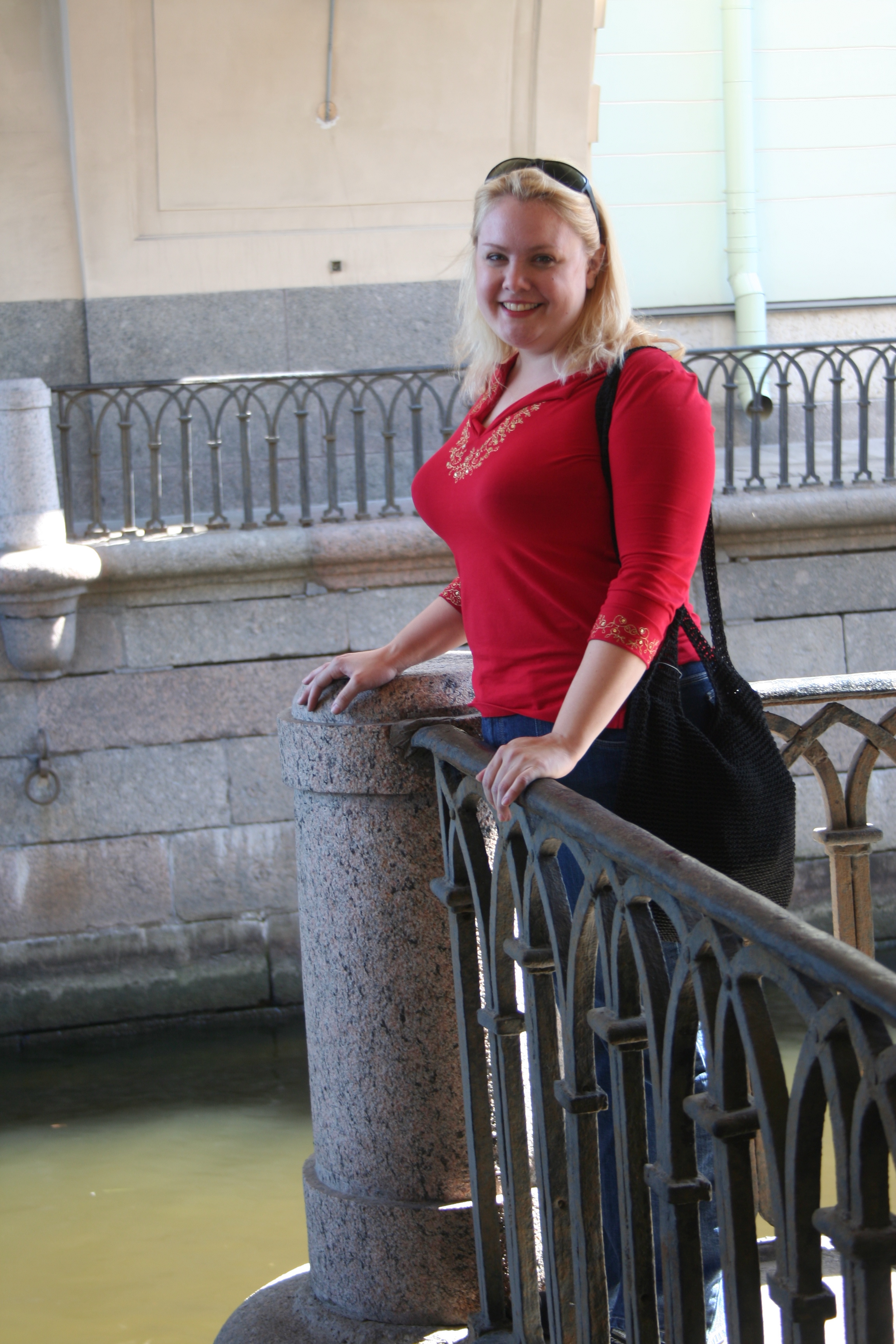
I strolled down Nevsky Avenue almost every day, visiting every cathedral and every shopping mall. I took a canal cruise. I saw DaVinci’s Madonna Litta at the Hermitage. I went to Dostoyevsky’s house. I attended the Kirov ballet. I toured the czar’s Summer Palace.

But there was one thing I still had to do: I desperately wanted to see a Tchaikovsky opera at the Mariinsky Theatre. I had tickets for Eugene Onegin.

I was staying with my parents in a little budget hotel called the Vyborgskaya. We were living in cramped quarters and it wasn’t very clean.  It had been an especially hard day; my dad had injured his foot, so walking around town was not very comfortable. We’d had to wait in long lines to buy subway tickets, and whenever we finally got to the front of the line, the clerk would pull out the “technological difficulties” sign and disappear! I was also feeling a little queasy because I had eaten a questionable meat pie at a local bakery. But I was still looking forward to the opera.

When we got back to the hotel, we were informed that we had to change rooms unexpectedly.  The maids had already begun to move our luggage out into the hall to make room for another guest! Meanwhile, we had been assigned to an even smaller room, featuring three little cots and one coffee table. There was no time to be outraged about any of this because in all the confusion, we were now late for the opera.

We stood outside the hotel in despair, trying to flag down a taxi at rush hour.  Finally, a friend asked us if we would be willing to take an “unofficial” taxi. We shrugged and said yes. Our friend told the driver to take us to the opera house… as fast as possible. And that’s how we ended up climbing into a strange unmarked car.

Before we could fasten our seat belts, the car sped off with a screech of tires. Our driver zigzagged around corners and through intersections at breathtaking speed. I had never flown across a suspension bridge that fast. (Of course, I had not yet experienced traffic in Kathmandu.) We were speechless, but this pirate taxi driver took his assignment very seriously: he had been told to get us to the Mariinsky as fast as possible. And he did.

We were dizzy when we got out of the car, but we did make it there on time.  The driver was grinning from ear to ear. We gratefully handed him some extra rubles for his race car skills. Finally, we stumbled inside the gorgeous auditorium with its rich interior and blue plush velvet seats.

And the music was electrifying. What could be better than hearing a Russian orchestra play Tatyana’s letter scene? I don’t think I can describe the sound of the violins surging with perfect Slavic passion. There are no words for that. It was an exquisite performance.

And even after all of that, we still made it back to the hotel well before sunset. I remember the sunlight shining on the river as we drove back across town.

So whenever June rolls around, I always think about the White Nights of St Petersburg… and my wild ride to the Mariinsky!

Listen to Your Life

Life doesn’t always go according to plan. When I graduated from the Mozarteum in Salzburg, I did not expect to create an opera festival in Nepal. That was not part of my “five-year plan” for launching my career. But in the summer of 2009, due to a very unusual chain of events, I found myself singing and teaching in Kathmandu!

Just a few months earlier, I had been struggling to survive in New York City. My master’s degree in opera was framed on the wall, but I was not getting enough “opera gigs” to pay the rent. So I took a day job with a non-profit organization called Hope Partnership Nepal.

While working for HPN, I learned that Nepal is a beautiful country that has been ravaged by civil war and political upheaval. Most Westerners are completely unaware… Read More

Full post at icadenza.com

Soprano in NorCal

Watch out — I just showered some high notes on Northern California!

I was invited up north for a couple of auditions. Auditioning is a funny thing. A typical opera audition only lasts about 10 minutes.

That’s enough time to sing two or three arias, and have a quick chat with the casting director. Opera singers will often travel for days to get their 10 minutes onstage!

And we plan our audition tours very carefully to ensure that we will have “a good ten minutes.”  We eat well, we sleep well, we save our energy, we warm up our voices and we focus our minds… all so that we can be dazzling when we step into the spotlight.

But what happens when the audition is over?  That’s when it’s time to relax and have fun! Whenever I audition in a new city, I just love to go exploring. So without further ado, here are my latest travel tips:

Sacramento

* California State Capitol Museum – Inside the magnificent capitol building, you can take a 45-minute tour emphasizing Californian history and politics. Unfortunately, there is no coatroom where you can leave your luggage, so I had to drag my little pink suitcase through the entire State Legislature, into the Senate, through the Assembly, up into the cupola, down into the basement, past the Governor’s office, and out into the gardens. But I had a great time.

* Old Sacramento – This historic part of town has an Old West atmosphere. There are several Gold Rush exhibits nearby; in fact, this would have been a better setting for the ill-fated Gold Rush tour that I took in San Francisco in January.

* Sacramento International Airport – Don’t ask me why there is a huge red rabbit suspended from the ceiling of the Sacramento Airport. It’s artistic, and it’s fun, and that’s good enough for me. In fact, there are a lot of fun surprises in Terminal B, including WI-FI lounges and a massage bar.  If you want a bite to eat, I can recommend the Gateway Bar, which features cushioned sofas, a selection of California wines, and a really amazing Greek sandwich (the “Icon,” a heavenly combination of gyro meat, lamb gravy, and tzatziki).

San Jose

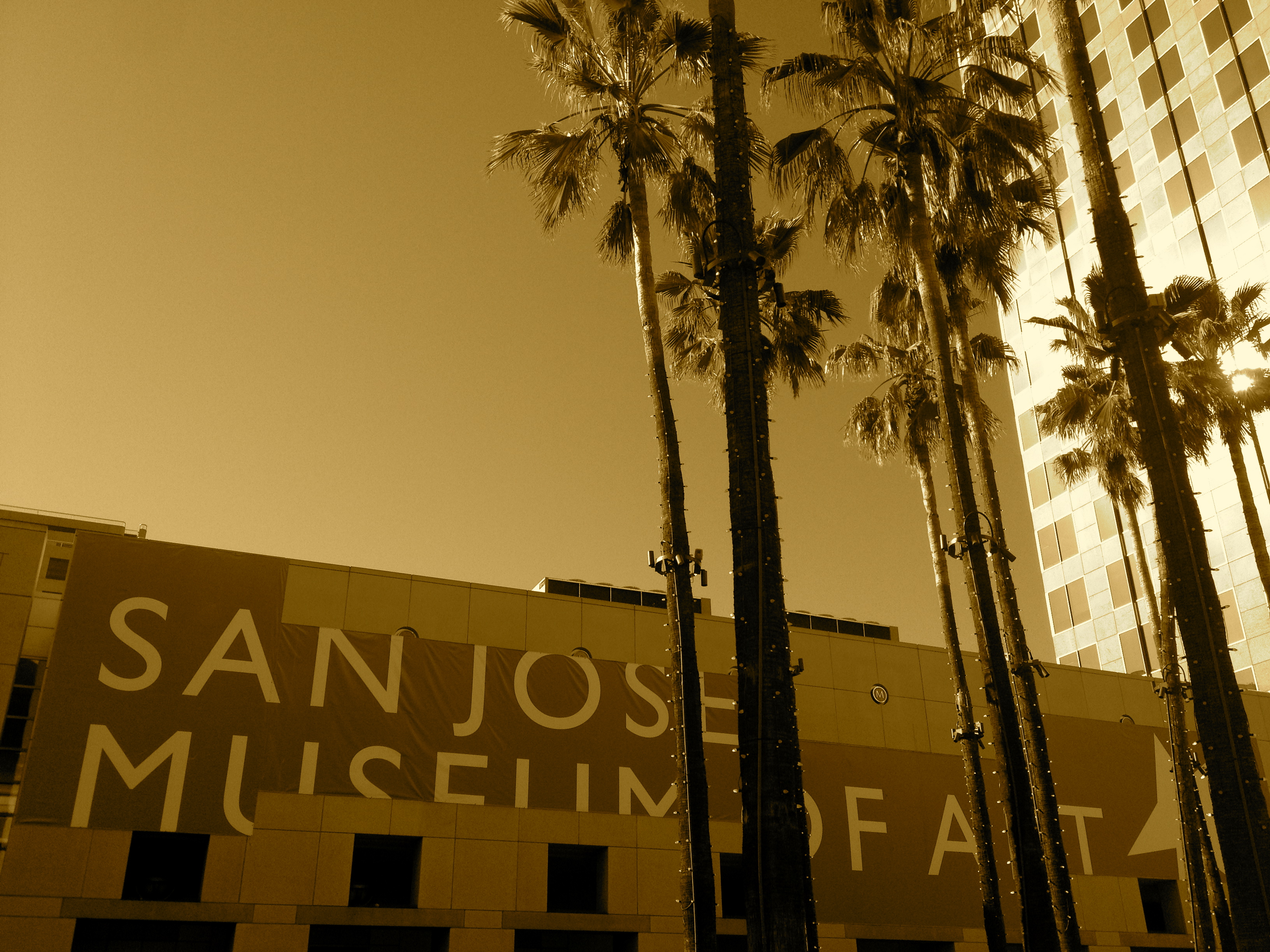
* San Jose Museum of Art – if you like contemporary art, you’ll love this colorful collection.  And if you simply need to take a break, you can sit beneath the palm trees in the outdoor plaza, or visit the museum shop and café inside.

* Extended Stay Deluxe Hotel (San Jose) –  My suite included a kitchen, a desk, a queen-sized bed, a sofa, a TV, and a washroom with a full bathtub. I also had access to the swimming pool, the jacuzzi, the fitness room (mostly cardio, no free weights),  and free ensuite high-speed internet. The hotel has plenty of parking, and is located just one mile from the airport and two blocks from the nearest light-rail station. The Bay Area isn’t cheap, and it can be tough to find affordable accommodations in a town where it costs $15 just to open the door of a taxi cab!  But this hotel fit neatly into my travel budget.

Norman Mineta San Jose International Airport deserves a shout-out from the Globetrotting Soprano because it is the only airport I have ever seen that has live piano music in the baggage claim area! That’s pretty impressive in and of itself.

And that’s all for today. Have a great weekend!