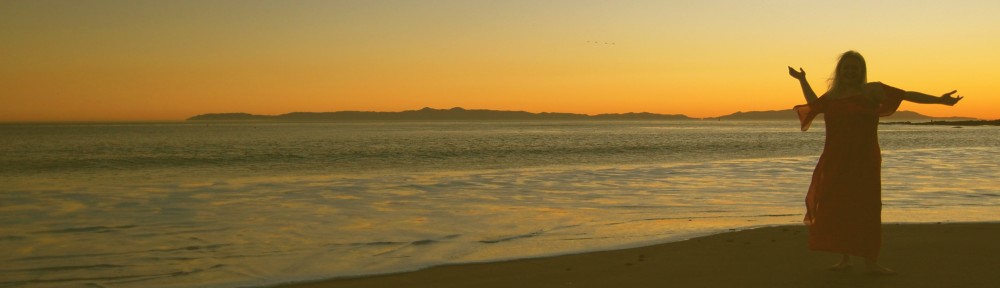
Travel Fitness: the Diva Workout

Singing is a sport.

Opera singers may not look like swimsuit models, but they are actually cardio champions.

According to the American Journal of Nursing, opera singers have stronger chest-wall muscles, greater lung capacity, and more efficient hearts than their non-singing friends.

But, if classical singing requires the muscle coordination of a professional athlete, why are singers so… plump?  Not all opera singers are heavy, but many cantanti struggle with their weight. Does it have to do with body type?  Metabolism? Lifestyle? No one knows for sure.   A New York Times article cited a study suggesting that singers produce too much leptin. We do know that the sound of a human voice is influenced by the size and shape of the body. Some people believe that fat actually produces a more resonant sound! Whatever the reason, the extra curves get noticed. There is increasing pressure on opera singers to lose weight.

That’s why so many 21st century singers are signing up for total body fitness programs!  Personally, I prefer a combination of yoga, Irish dancing, and cycling by the beach. (I also list “singing Wagner” as one of my endurance sports.)

I enjoy some fitness video games: Wii Fit Plus for strength and posture, and ABBA You Can Dance for those rare moments when I’ve had enough opera and I’m craving happy ’70s music.

But how on earth do you maintain a program of cardio, strength, and flexibility training when you’re on the road? For people who travel, exercise is a special challenge. It requires a lot of planning! I like to collect tips from this cool blog: My Travel Fitness

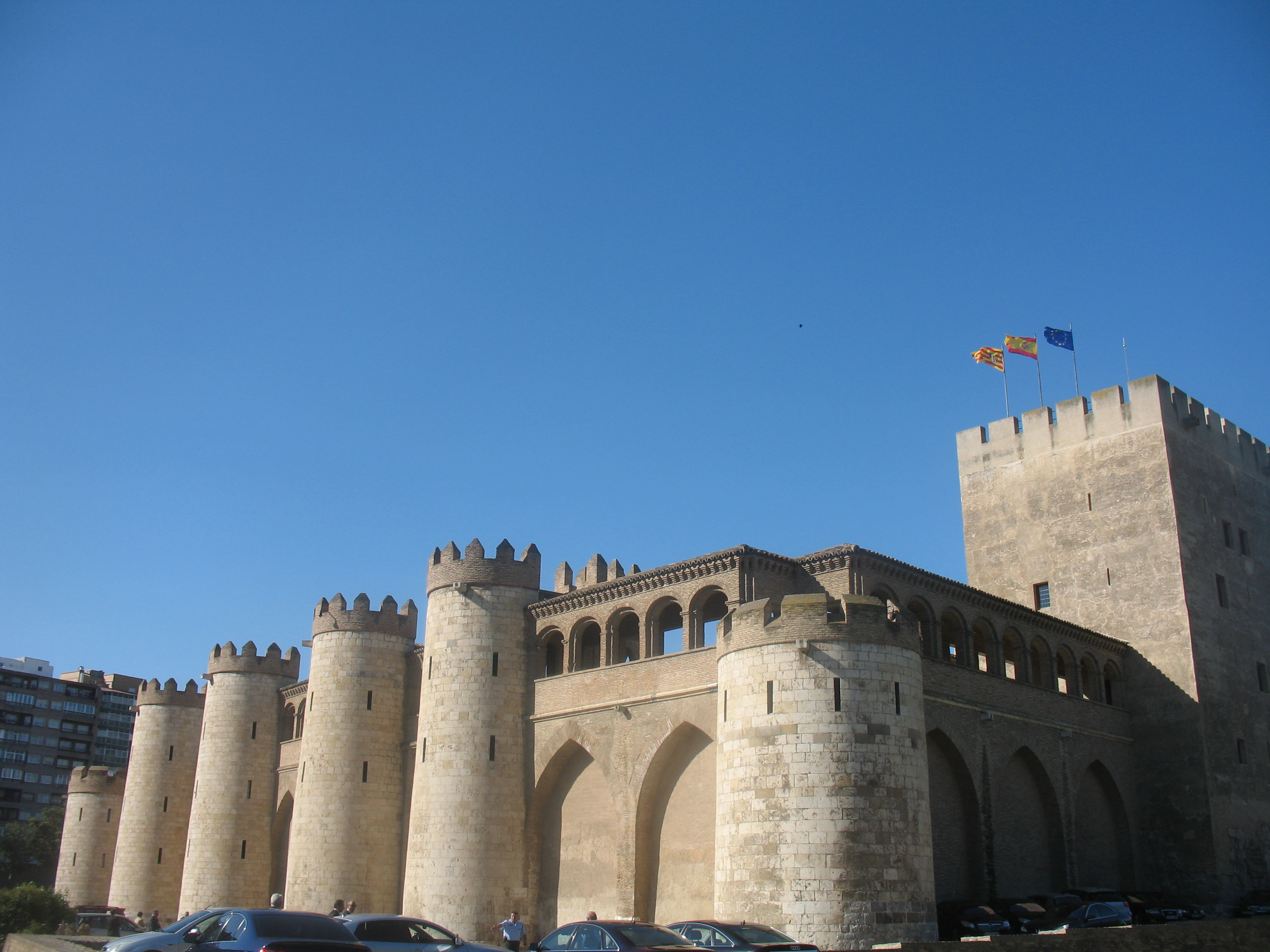
In 2010, I traveled to Spain for an opera contest while I was training for my first triathlon. Before I even got on the plane, I wrote down the directions from my Spanish hotel to the nearest public swimming pool. I also found the nearest bike rental shop. When I got there, I went hiking as often as possible.  For me, singing always comes first, but I managed to maintain a (slightly less rigorous) triathlon training schedule. I may not have a castle in Spain… but I’ve jogged around one.
Most singers find that they can improve their energy and vocal stamina by spending more time at the gym. They are more comfortable with dancing, and swordplay, and leaping around onstage if they have taken martial arts classes, or dance aerobics, or gyrotonics. Exercise also helps melt away the stress of a major career. Cindy Sadler has blogged about her success with cycling.  Renée Fleming does Pilates.

And if you’re not a singer, but you’re looking for a fun new cardio activity, try voice lessons! Singers learn advanced breathing techniques by training the muscles of the thorax and the abdominal wall. An opera colleague of mine surprised her doctor by demonstrating that she could hold a normal conversation while jogging on the treadmill.  “Sustaining breath control over an elevated pulse?” she scoffed.  “Yeah, that’s kinda what I do.”  Singing is fun and it’s good for your heart, too! 🙂

Finally, I’d like to share an opera video has been circulating on Facebook this week. It demonstrates the advantages of being in shape (check out what happens at 0:50):

Starving Artists in Moscow

This is another “blast from the past” blog post. For some reason, I’ve been thinking about all the travel adventures I had before I ever started this blog! In my last post, I took you on a wild ride through Nepal, and this time, I’d like to take you to Russia…

There’s a certain mystique about the Tchaikovsky Competition in Moscow. It’s a prestigious classical music contest, and it has a very old-school Russian atmosphere. But Americans have been quite successful there. Famous gold medalists include Van Cliburn (piano) in 1958 and Deborah Voigt (voice) in 1990.

So I felt humbled to be the only American vocalist invited to compete in the XIII International Tchaikovsky Competition in 2007. This is, after all, a serious international medal competition with several events (piano, cello and voice) and it only happens once every four years. I felt like I was going to the Olympics!

We were even treated like Olympians.  Our travel and housing expenses were covered by the competition. (Even my pianist’s expenses were covered, so I invited Ayako, a friend and colleague from the Mozarteum in Austria, to perform with me in Moscow.) We received free T-shirts, tote bags, commemorative pins and magnets. We all lived in the same mega-hotel, right outside the center of town, just like an Olympic Village.

The officials posted intricate schedules, where hundreds of competitors were organized by name, instrument and nationality. (“Lindsay Feldmeth, voice, USA & Ayako Watanabe, piano, Japan” — I learned to recognize our names in the Cyrillic alphabet.)

The competitors traveled into the city together by bus. (Well, Ayako and I often escaped and used the subway instead, but we’re rebellious like that.) We even took a group field trip to the Tchaikovsky Museum in Klin!

So when they announced that we would also receive a certain number of free meals, we were delighted. Like most young artists, Ayako and I were on a tight budget, and good food can be expensive in Russia. We were issued several blue “meal tickets,” for use at the cafeteria in Tchaikovsky Hall.

On the first day of the competition, we landed in the cafeteria after a long and exhausting rehearsal. I surveyed the dishes underneath the glass and pointed to a delicious dish of lamb. But the man serving the food shook his head emphatically. “Nyet.”

“Oh!” I said, looking down at the blue ticket in my hand.  “Well, that makes sense,” Ayako whispered to me in German.  “After all, it’s a free lunch. They can’t give us all lamb.”

I nodded, smiled, and pointed at a smaller dish of chicken breast. “Nyet.”  Hesitating, I indicated a corn salad.  “Nyet.”  Confused, I looked to see what the other competitors were eating. When I saw what they had chosen, I pointed sadly to a burnt piece of meat that resembled beef tongue.  “Da!” said the man happily, scooping it onto my tray.

We were still grateful for the free lunch, but it really wasn’t the best meal of the year. After that, Ayako and I ate out as often as possible. Restaurants are pricey in Moscow, but there are a variety of good places to eat within steps of Red Square, if you know where to look.  I can recommend this website.

But even if the food was underwhelming, nothing could match the experience of singing onstage at Tchaikovsky Hall.  It was a magic moment.  Afterwards, I gave a backstage interview (in English, thank goodness!) for a Russian radio program.

Throughout the experience, I was deeply touched by the Russians’ love for classical music.  I could not believe how many spectators showed up to watch the preliminary rounds of the competition — even on weekday mornings!

After the quarter finals, I went out to the lobby to get some air.  I had only been standing there for a few minutes when I was approached by an older Russian gentleman.  He pointed to my picture in the program.  “Leensee Fyeldmet?” he asked hopefully.  “Yes, that’s me,” I said. He pressed a pen into my hand and asked me to autograph his program.  Then he threw his arm around me and had his son take our picture! It was a sweet moment.

I didn’t win any medals at the Tchaikovsky Competition. But I will always consider Moscow my “Olympic” experience. до свидания!

Valentine Playlist

Buon San Valentino!

Dear readers, I made you a gift for Valentine’s Day. It’s a romantic playlist of amazing operatic love songs.  45 minutes of classic opera arias and love duets on YouTube.    I hope you enjoy it. Baci, Lindsay


Photo by Dragan Todorovic

1. Meine Lippen, sie küssen so heiß

2. Mon coeur s’ouvre à ta voix

3. En fermant les yeux

4.Trahir Vincent

5. Habañera

6. Che m’ami, deh, ripetemi!

7. Nessun dorma

8. O mio babbino caro

9. O soave fanciulla

10. Nedda! Silvio!

11. Winterstürme… Du bist der Lenz… O süsseste Wonne!

Voice Lessons by Kobe Bryant

Everyone’s still talking about the Superbowl.  But I’m thinking about basketball, mostly because I got to experience my first Lakers game last week.

Since I’m a native of Los Angeles, it’s a little embarrassing that this was my first trip to see the boys in purple. But basketball tickets are more expensive than opera tickets! And I do spend a lot of time in other cities.

As a newcomer to the Staples Center, I was dazzled by the spotlights on the basketball court.  And I enjoyed seeing “my” team in action. But I was most impressed by the Black Mamba himself, Kobe Bryant. (Photo courtesy of http://ambasketball.com)

In fact, I learned a lot about singing from Kobe.  (Just by watching him play basketball!)  Here’s what I took away from the game:

3 lessons that opera singers can learn from Kobe:

1. Make it Look Easy

Kobe Bryant is an elite athlete.  He has extraordinary talent, and he has put in thousands of hours of hard work. But he makes it look easy.

And that is the kind of effortless athleticism that makes a great singer.  To be a professional opera singer, you need to train your body like an athlete, train your mind like a scholar, and train your imagination like a painter. But the greatest challenge is to pursue excellence in all of those areas without ever getting tense!

Kobe manages to stay relaxed under tremendous pressure.  If he were coaching a young opera singer, I think he might say: keep your standards high, but stay loose. Don’t worry about anything. Sing with the same confidence that you have when your team is 40 points ahead.

2. Have Fun

Of course, Kobe exudes confidence on the court because he’s actually having fun.  It’s obvious that he loves this game. That playful feeling is often lost by opera singers, somewhere around their third year of conservatory training, when they become obsessed with vocal technique and forget why they started singing in the first place. But to an audience — even the most sophisticated audience — there’s nothing better than watching someone who simply loves to play the game.  Never lose the joy.

3. Be a Diva

The word “diva” has some negative connotations, and with good reason! Nobody wants to work with someone who is demanding and self-centered, whether it’s on the stage or on the court.

But let’s be honest: it’s no fun to work with artists (or athletes) who have no personality, either. There’s nothing less exciting than an opera where every singer has exactly the same sound, produced in exactly the same way.  We can do better than that!

I’m a pretty cheerful person, but I don’t want my life to be entirely “drama-free.”  I’m not advocating selfish or unkind behavior; that is never appropriate. The first rule of the theater is to respect your colleagues! But I think that opera singers should live boldly. If you’re too frightened to “make a scene,” how can you ever produce a gran scena onstage?

It’s true that basketball stars’ salaries are inflated, and opera stars’ egos are inflated. But we do need stars.  We will always need leaders who have the audacity to take risks and, yes, the self-indulgence to say something original. That’s the kind of energy that makes magic, on every playing field.

Kobe is a bit of a divo, and that’s part of his appeal. He even speaks Italian, which definitely makes him more operatic. So I am grateful to Kobe for giving me an excellent voice lesson, and I hope you enjoyed it, as well. Ciao!

Beach Music

I love falling asleep to the sound of waves crashing on the beach.

When I was growing up, my family went beach camping every summer, so I remember falling asleep to that glorious noise. There’s nothing quite like it.

And that “beach music” stays with me, even when I travel. But when I’m away from home for too long, I start to  miss my ocean.  I feel like my body is calibrated to the rhythms of the Pacific.  I can’t really appreciate the sultry, salty water of the Mediterranean, or the quick and nervous tempo of Atlantic tides.  I crave slow, powerful waves that take a full 7 seconds to breathe in … and breathe out.

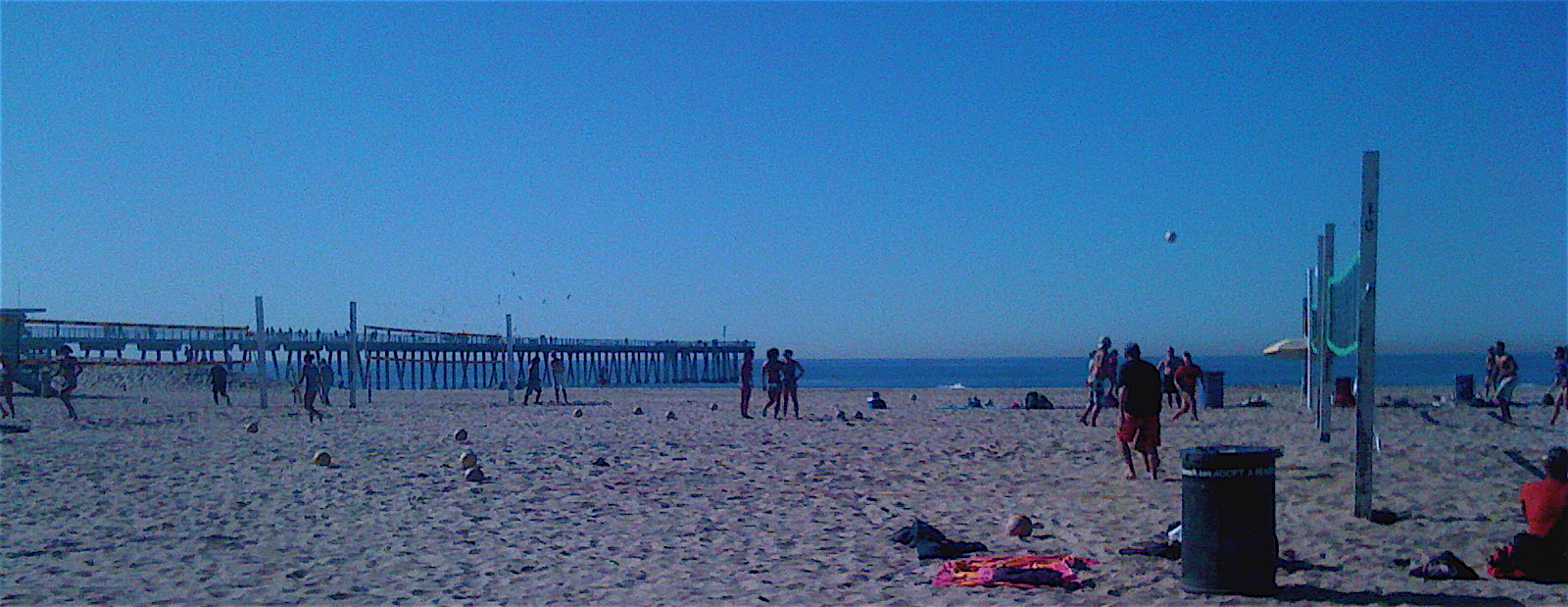
We have had “bikini weather” here in Los Angeles over the past few days. On Saturday, the sky was so blue that I decided to hit the bike path in Hermosa Beach. The path extends from South Torrance all the way to Malibu, and it’s a little slice of Americana, all by itself. Everywhere you look, there are people having fun: roller blading, walking their dogs, selling sunglasses, sitting in outside cafés or playing beach volleyball in the sand. This is true beach city culture.  California cool.

And as I pedaled along the bike path, I tried to think of all of the operas that are set on beaches.  Oberon comes to mind immediately.  I once had the chance to sing Rezia’s aria to the ocean, “Ozean! du Ungeheuer,” while aboard the Queen Mary!  And how about Ariadne auf Naxos?  Ariadne has been abandoned on the Greek island of Naxos and sings her aria from a large rock.  Perhaps it could look like this?  And Amelia’s aria from Simon Boccanegra is also sung on a beach.

What is it about beaches that inspires people to sing?  There must be dozens of Italian and German songs that praise the sun and the sea and the sand!  And then there’s always the Beach Boys. 😉

Anyway, I think there should be more opera on the beach!   There are some logistical issues, and some acoustical issues, but it can work. In 2009, I sang at the Hawaii Performing Arts Festival, and we performed a full concert at a beach resort on the Big Island.  I sang Puccini under the stars with my feet in the sand.  It felt wonderful, and I later found out that the ocean had carried my voice down the beach, so that Butterfly’s aria could be heard half a mile away!

I now live on a hill above the ocean, and from here, I can’t quite hear the pounding of the surf.  So as I drift off to sleep, I’ll just have to imagine a beach opera.  Buona notte.

A Soprano in Bayreuth (an epic tale)

It was a dark and stormy night.

I couldn’t see anything out my window as the train chugged along. And because there are no fast trains to Bayreuth, I was traveling at about the same speed that Richard Wagner did back in 1870s. 

As a Wagnerian soprano, I was pretty excited about seeing Bayreuth for the first time. This is the town that hosts the famous annual Wagner Festival.  And it’s the place where Wagner himself spent the last decade of his exciting and highly controversial life.

Wagner’s music set the world on fire, and I just couldn’t wait to see the place where so much music history had happened. But when I arrived, it was too late to go exploring. I checked into the Golden Lion hotel and fell into a deep jetlagged sleep, with visions of flying Dutchmen in my head.

By the time I woke up, snow was falling softly on the picturesque Bavarian streets. So I put on my hat and gloves and hit the cobblestone road. But Bayreuth is very quiet on snowy Saturday mornings! It was several minutes before I saw another human (of course, I did see three Norns, a couple of valkyries and a talking bird… Just kidding. Wagnerian humor.)

The snowflakes didn’t stick to the ground, but I could hear the crunch of frozen leaves under my feet as I walked around the Hofgarten. First, I went to the Franz Liszt Museum (the great Hungarian composer was also Wagner’s father-in-law), where I studied handwritten manuscripts of Liszt’s compositions (!) and stood quietly in the room where he spent his final hours. And then I visited Wahnfried, the historic Wagner family villa, although the house itself is being refurbished and will remain closed until 2013.

Finally, I arrived at the Festspielhaus, the opera house that Wagner built to his own specifications in 1876. This is the site of the famous summer opera festival, the Bayreuther Festspiele.  I walked the length and width of the enormous stage and tested the hall’s spectacular accoustics. I would dearly love to spend more time on that stage.

But you don’t have to sing at the Festspielhaus to experience Richard Wagner in Bayreuth. The town is peppered with subtle references to his operas. Need directions to the station? Take a right on Meistersinger Street. Want to go to the festival? Meet me on the corner of Nibelungen and Tristan! If you want to relax, you can enjoy the local spa: Lohengrin Thermal Baths. (I wonder if they have any swans there?) And if all this talk of opera is giving you a headache, just get some aspirin at the Tannhäuser Pharmacy!

Nevertheless, this city is not just about Richard Wagner.  As I walked around the Old Town today, I started to get a vision for what Bayreuth had been like before its most famous (and somewhat infamous) resident arrived.  There is a beautiful 18th century castle as well as several charming Baroque churches. Best of all, there’s another opera house! The Markgräfliches Opernhaus is a breathtaking example of German Rococo.

But at the end of my magical weekend in Bayreuth, it still seemed like I had forgotten something. So I went through my mental checklist one more time: Festspielhaus, Baroque opera house, castle, Liszt Museum, Wahnfried… but I didn’t slay any dragons, marry any mysterious knights, or steal any golden rings.   I didn’t even immolate!  I guess it doesn’t matter.  After all, you should always leave something for your second visit to Bayreuth…

Pavarotti Airport

A few minutes ago, I landed at the Lindbergh Field San Diego Airport.

And that got me thinking about cool airport names. Why stick with a prosaic name like LAX when you could name your airport Sky Harbor (Phoenix) or Le Bourget (Paris)?

Many airports are named after military heroes. Consider Charles de Gaulle Airport (Paris), King Shaka International Airport (Durban), and my favorite, Alexander the Great Airport (Skopje, Macedonia).

Just occasionally, airports are named for artists. There’s Charles Schulz M. Airport in Sonoma. And in Malaga, they named one of their terminals after Pablo Picasso (c’mon, doesn’t the guy deserve a whole airport)?

The Italians certainly know how to name their airports.  Leonardo Da Vinci Airport (Rome), Cristoforo Colombo Airport (Genova), Galileo Galilei Airport (Pisa), and of course, Giuseppe Verdi Parma Airport are great examples.

Hey, want to play some airport trivia? In which cities would you find these airports:

a. Mohammed V Airport
b. Franz Josef Strauß Airport
c. George Bush Interncontinental Airport
d. Chapatri Shivaji International Airport
e. Bob Hope Airport
f.  Robin Hood Airport

{You’ll find the answer key below. Just scroll down.}

Some great musicians have also been “airported.” We have Louis Armstrong New Orleans International Airport, John Lennon Airport in Liverpool, the Warsaw Chopin Airport and, best of all, Wolfgang Amadeus Mozart Airport in Salzburg.

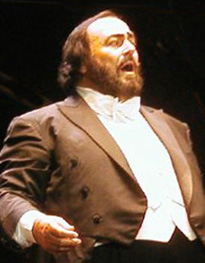
But here’s my question: why not name airports after opera singers? After all, opera singers spend a lot of time in airports! And we sing stratospheric notes! Besides, naming an airport after a diva gives it a touch of class. Just imagine the dramatic effect of a Maria Callas Airport in Greece. Or a Joan Sutherland Airport in Australia. Or … how about the Luciano Pavarotti International Airport of Modena? Wouldn’t that be cool? Dare to dream!

Answer Key:

a. Casablanca
b. Munich
c. Houston
d. Mumbai
e. Burbank
f. Doncaster/Sheffield (you guessed Nottingham, didn’t you?)

Well now it’s time for me to fly to an airport that was once called the Great West Aerodrome… located in a little English hamlet named Heath Row.  😉

Panning for Gold in San Francisco

“What better way to celebrate the New Year than by going back in time?”  I thought as my plane touched down at SFO on Monday morning. “Instead of doing all the usual touristy things,  I’ll take a Gold Rush tour!”

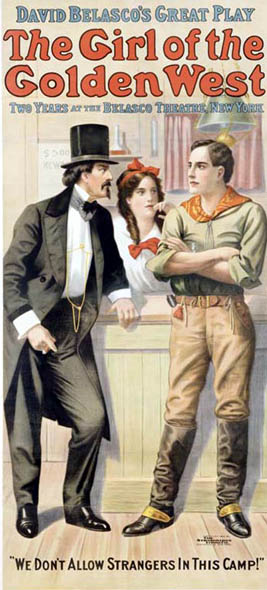
I’ve always pictured Old San Francisco as a wild Western town. My mental image of it was a cross between Puccini’s opera, Girl of the Golden West, and that scene from Seabiscuit where Charles Howard tries to open a bicycle shop on Van Ness Avenue.

I couldn’t check into my hotel right away, so there was time to indulge this fantasy. And with visions of cowboys in my head, I rolled my little pink suitcase down Market Street, in search of the Old West.

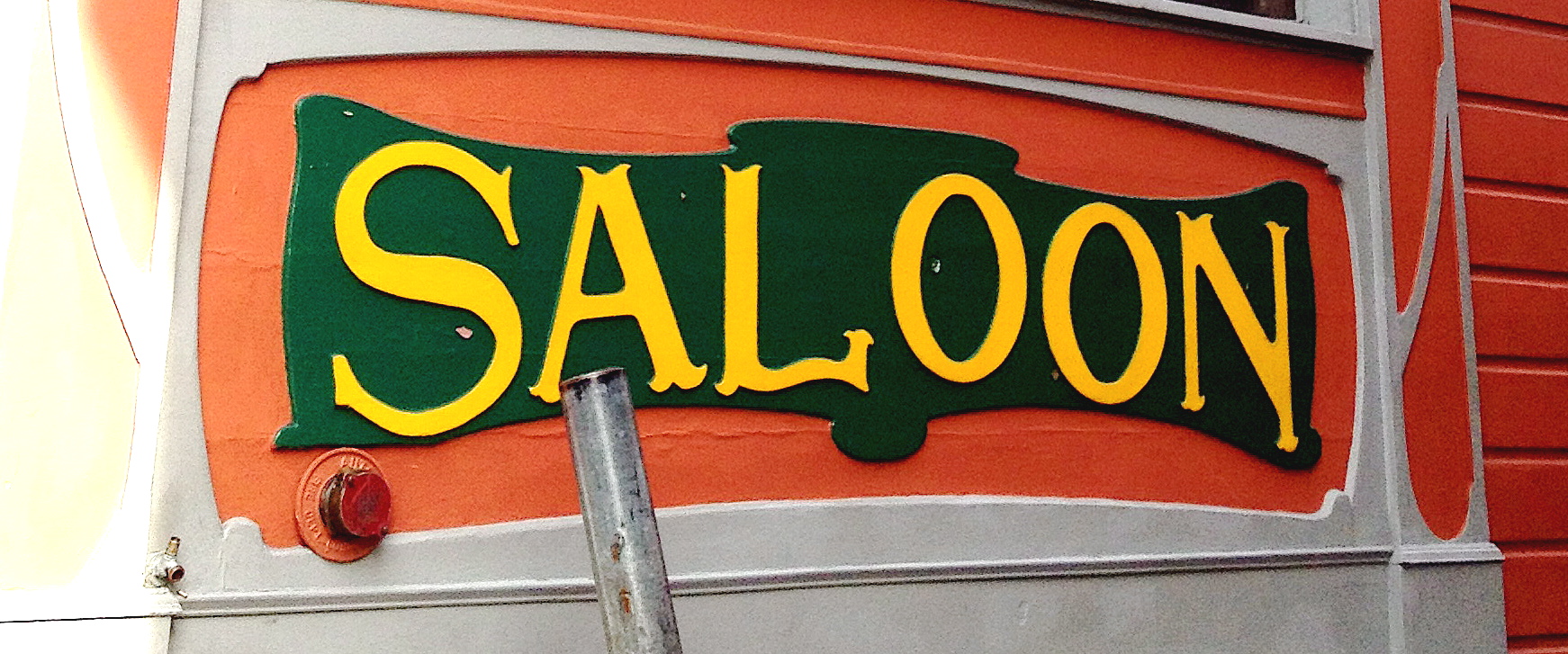
Thus began a comedy of errors. First, I attempted to download an audio guide to the Gold Rush, but it would not play on my iPhone. So I hunted down the Wells Fargo Museum, which turned out to be closed for New Year’s. Then I searched for the famous Belli building, only to discover that it was invisible under its scaffolding. I did manage to find the old headquarters of the Pony Express, but in the absence of any ponies, it just wasn’t that exciting.  Finally, I spotted something quintessentially Western: a saloon!

Curious, I peered inside.  There were a bunch of guys at the bar drinking whiskey. But as soon as my shadow fell across the threshold, everyone stopped talking.  I guess they don’t serve a lot of blonde girls with bright pink suitcases? By this time, I was tired and hungry, and I felt like a bedraggled 49er! So I pulled up my sleeves and sidled up to the bar.  But when I asked for a menu, it became clear that this was not the kind of saloon where a tourist can get lunch. One bearded fellow gestured at the TV and said meekly, “we don’t actually have food but we can change the channel to the Food Network if you want.”

So I gave up and indulged in a more typical San Francisco experience: a bowl of clam chowder and a loaf of sourdough at the Fog City Diner. By this time, I had hiked all over the historic Jackson Square district, as well as Nob Hill, Chinatown, Little Italy, the Financial District and Fisherman’s Wharf, while enjoying spectacular views of the Bay Bridge. So I was ready to call it a day.

But my journey isn’t over yet. I did not actually come to San Francisco to learn about the Wild West.  The Bay Area is home to many fine opera companies and I am here to audition for one of them. Maybe I’ll strike gold, after all?

the City of Angels (and how to use it)

Having lived in some of the most beautiful places in the world, I never get tired of returning to Los Angeles.

L.A. has so much natural beauty! The people are friendly. The weather is beautiful.  There is access to all of the resources of a major metropolis. There’s a good reason why millions of people want to live here.

Of course, there are disadvantages, too.  The city sprawls out over more than 500 square miles, which means that it can take a lot of time to get from here to there.  There is smog (although the air is usually crystal clear at the beach) and there is traffic (although it is generally predictable and therefore avoidable, if you know the short cuts).

But in general, I find that Los Angeles is misunderstood. So often, people will tell me: “I was in L.A. once. It took us forever to get out of the airport and there was so much traffic on the freeway.  Then we went to some conference center in a sketchy part of town.  It was terrible. I could never live there.”  When I ask them if they visited the South Bay, or the foothills, or the art museums, or the sports stadiums, or the university campuses, or the Hollywood Bowl, or any of the beaches, they look at me blankly and mumble that they were in Malibu for thirty minutes but they didn’t actually go to the beach. Uh-huh.  Yeah, you haven’t really been to L.A.

When planning a tip to L.A., imagine that you are visiting a wild and foreign landscape!  Los Angeles is not like other cities, so don’t expect it to feel familiar. Be kind to the natives, even if you think their customs are a little weird — try to get in a mentality where there is an exaggerated emphasis on cars, movies, and beach volleyball.

Got that? OK.  Now, here are my 4 basic rules for having a good time in the Southland:

1. Respect the Freeway

The first mistake that tourists make is to assume that the city has a “center.”  Downtown L.A. is a very cool urban community (boasting the Music Center and our new Cathedral, among other things), but it is not the “center” of Los Angeles in the European sense.  Despite the success of Beverly Hills 90210, there is no single zip code where everything happens.  Greater Los Angeles is a collection of smaller communities, each with its own unique culture.  You might hate being downtown, but love the beach cities.  You might prefer the mountain vistas of La Cañada to the fashionistas of Rodeo Drive.  You might like Koreatown better than Olvera Street. But it’s all part of L.A.! Angelenos spend a lot of time on the road, going from one town to the next, without ever leaving L.A. My mom once quipped, “Los Angeles is a freeway looking for a city.”

Treat the freeways with respect.  A freeway is a wild and powerful animal, but it can really help you… as long as you obey its laws and use its energy to your own advantage. If you do get lost, ask someone for directions.  Angelenos love to talk about freeways. We talk about the traffic with the same enthusiasm that other people talk about the weather.

Freeway photo by Tom & Michele Grimm, DiscoverLosAngeles.com

2.  Plan ahead

I love to be spontaneous!  But as a native of L.A., I know that this city requires a lot of planning.  If you want to cover more than 90 miles in a day (not unusual here), and still arrive at the right place at the right time,  you have to think ahead.  Get online before you plan your day: the Internet will help you map your route, buy your tickets, and choose where you want to have lunch before you get there.  Also plan what you will do in the car.  Road rage rarely happens to people who are having good conversations, listening to their favorite music, or enjoying an audio book.

3. Enjoy the Great Outdoors

Please, please, please do not leave L.A. without at least putting your toes in the Pacific Ocean.  Go hiking, go kayaking, go parasailing.  If you like cycling, enjoy the 25-mile bike path from the trendy Santa Monica Pier to the more remote beauty of Palos Verdes.

4. Go to the Opera

It seems that L.A. is on the verge of becoming one of the world capitals of classical music.  Under the musical leadership of James Conlon and Placido Domingo, L.A. Opera consistently attracts world class artists for stellar productions.  Gustavo Dudamel is pouring his dynamic energy into the L.A. Philharmonic. The L.A. Master Chorale is utterly fantastic. And the Hollywood Bowl continues to offer classical concerts to audiences of 18,000!

Of course,  I don’t spend all my time in L.A.  If you’ve read this blog before, you know that I am totally in love with Europe.  I love European music, European culture, European history, European food, European architecture! I feel very much at home there. And that’s why I’m often on a plane to London, Paris or Vienna.  But at the same time… I’m pretty stoked about spending Christmas with my family in the city of angels. 

Wishing you all a very merry Christmas from L.A.!

Vienna, All Dressed Up For Christmas

This week, I decided to splurge on a little pre-Christmas gift for myself: Vienna.

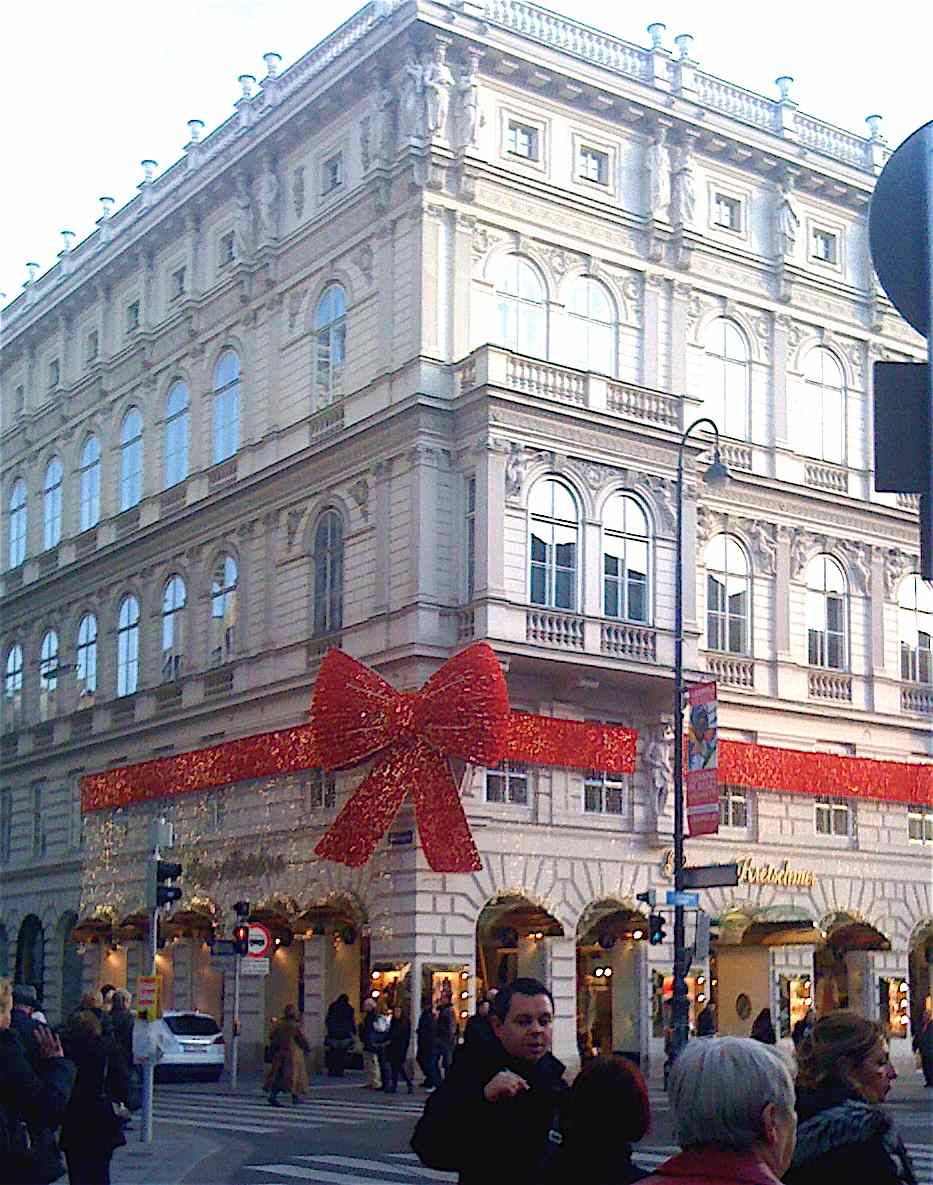
Every now and then, it’s nice to visit a beautiful city even if I’m not performing there that weekend. So I decided to head to the capital, and I wasn’t disappointed. The Imperial City is all ready for the holiday season, with the most elegant display of Christmas lights along its fashionable boulevards.

Sunday evening, I had the pleasure of seeing Verdi’s Nabucco at the Staatsoper.  The Ukrainian-Russian soprano Maria Guleghina was battling a cold that evening, but she still delivered an impressive performance in the role of Abigaille. When I last heard her sing it in Los Angeles, Ms. Guleghina gave an electrifying rendition, pinning people to their seats with a wall of sound. It was pretty exciting.  But this time, she sang with less wildness and more nuance, letting her voice blossom slowly into creamy high notes and chesty low tones.

The next day, I extended my mini-vacation to include the Naturhistorisches Museum.  If you read my posts about Florence, you know that I am a museum lover; in fact, I “visit” certain works of art whenever I’m in Paris (Winged Nike at the Louvre) or London (the Parthenon Frieze at the British Museum) or Rome (Michelangelo’s Pietà in St Peter’s Basilica). I consider these artworks to be my friends.  Since I was in Vienna, I had to drop by and say hello to the famous Venus of Willendorf, an ancient statue in the shape of a fertility goddess.  Some experts believe that this little 5-inch statue is 24,000 years old! So I checked in with Venus, not because I’m interested in fertility this year, but just because she’s that cool. In fact, the Naturhistorisches Museum is full of cool stuff, including amethyst geodes and dinosaur bones. There are a number of fun exhibits for kids, like a “time machine” that documents continental drift.

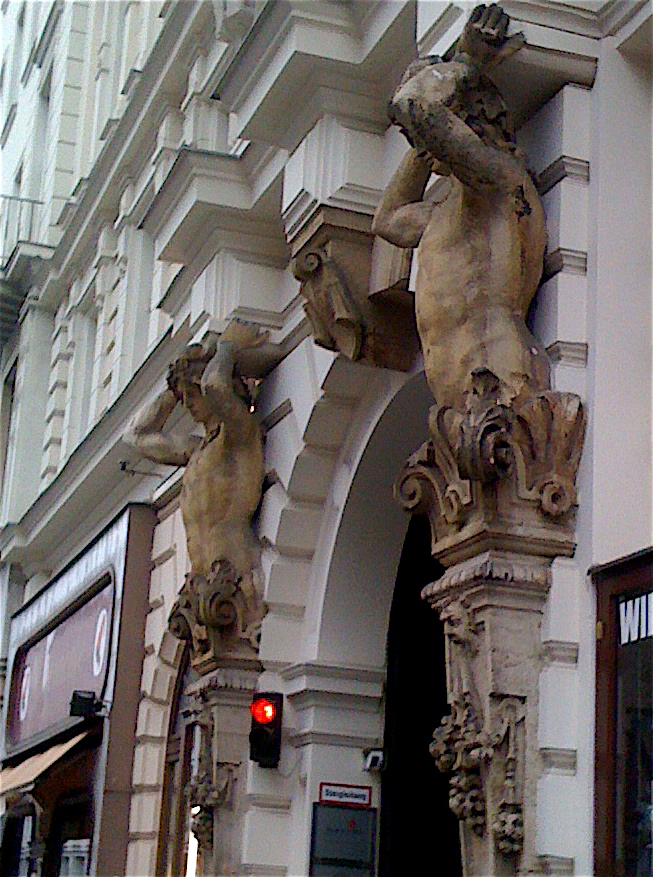
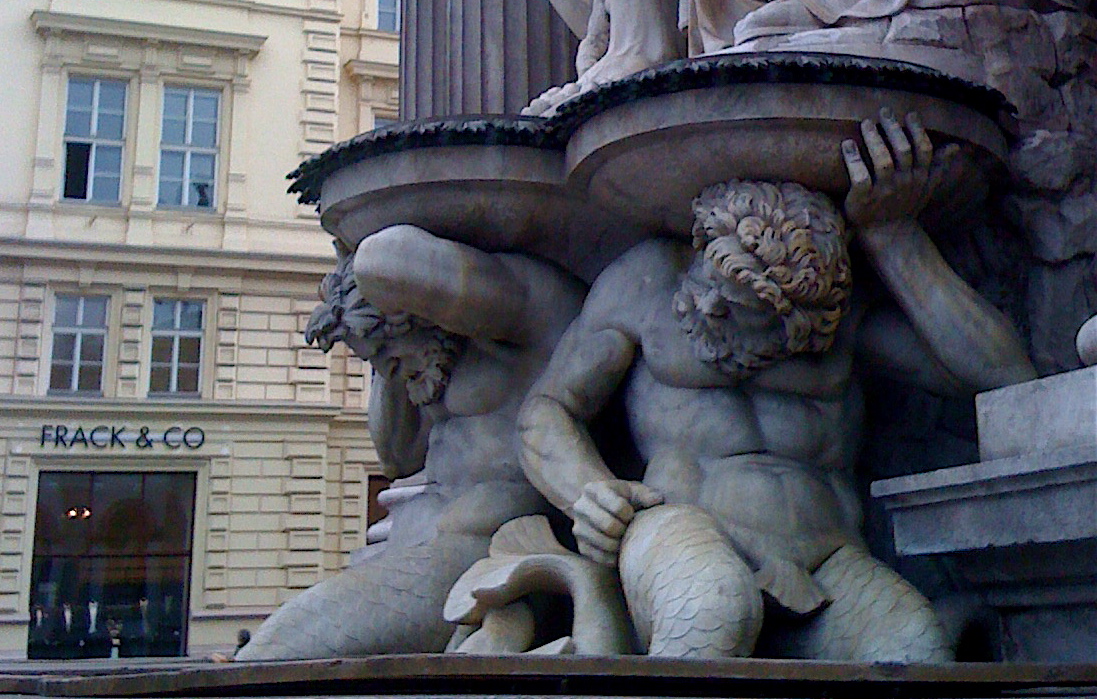
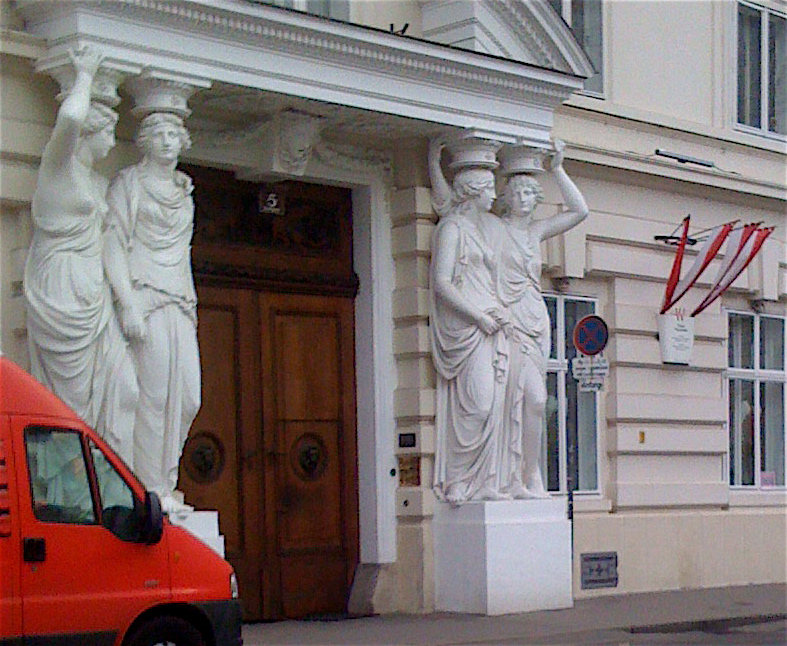
All in all, I had a marvelous time in Vienna.  It is a glorious city, steeped in culture and art. The Economist recently hailed Vienna as the city with the highest quality of life in the whole world! No one can deny that it is a great place to be. And yet, when I actually lived in Vienna in 2004, I noticed that the city also has a peculiar kind of heaviness to it.  There are so many old traditions that they can actually weigh you down.  All over the city, there are fantastic neo-classical statues in niches and fountains and columns and archways.  Very often, you will find statues of young men and women (and serpents and griffins and mermaids…) supporting the buildings of Vienna on their backs and shoulders and heads.

But if you’re strong enough to carry the weight of an Empire between your shoulder blades, then Vienna makes an unforgettable Christmas present.  🙂