Chocolate Snails & Skating with Mozart

Well, it’s time to leave Salzburg and head home to California for Christmas…

It’s been a wonderful autumn in Austria! And I finished my last performances yesterday, so I was free to wander through the Christmas Market today.

I also indulged myself by eating a chocolate snail.  No, not a real snail. Die Shokoschnecke is a favorite pastry of mine.

I need to board my plane in just a few short hours, so let me leave you with a quick video clip of kids having fun on the ice skating rink in Mozartplatz. Skating under the shadow of Amadeus!

Vienna, All Dressed Up For Christmas

This week, I decided to splurge on a little pre-Christmas gift for myself: Vienna.

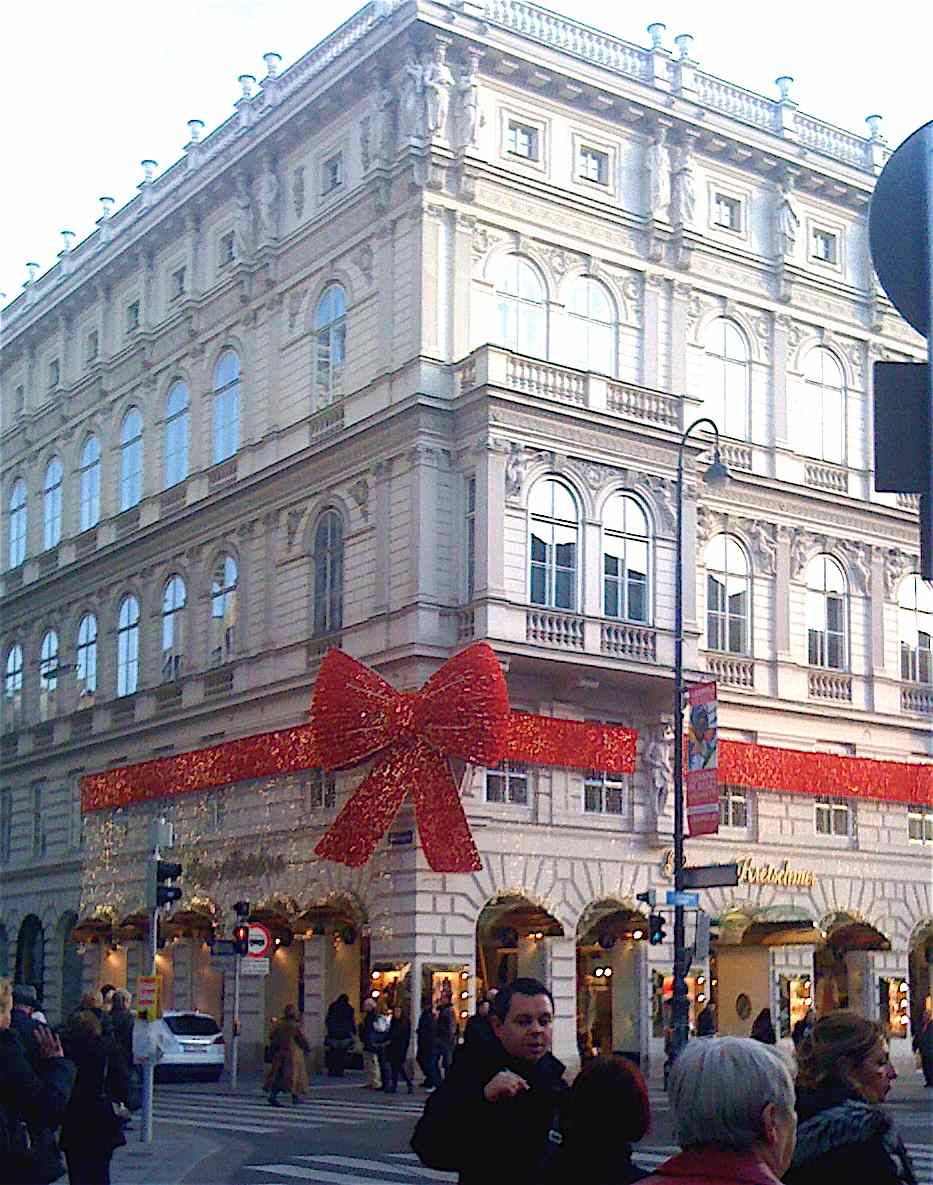
Every now and then, it’s nice to visit a beautiful city even if I’m not performing there that weekend. So I decided to head to the capital, and I wasn’t disappointed. The Imperial City is all ready for the holiday season, with the most elegant display of Christmas lights along its fashionable boulevards.

Sunday evening, I had the pleasure of seeing Verdi’s Nabucco at the Staatsoper.  The Ukrainian-Russian soprano Maria Guleghina was battling a cold that evening, but she still delivered an impressive performance in the role of Abigaille. When I last heard her sing it in Los Angeles, Ms. Guleghina gave an electrifying rendition, pinning people to their seats with a wall of sound. It was pretty exciting.  But this time, she sang with less wildness and more nuance, letting her voice blossom slowly into creamy high notes and chesty low tones.

The next day, I extended my mini-vacation to include the Naturhistorisches Museum.  If you read my posts about Florence, you know that I am a museum lover; in fact, I “visit” certain works of art whenever I’m in Paris (Winged Nike at the Louvre) or London (the Parthenon Frieze at the British Museum) or Rome (Michelangelo’s Pietà in St Peter’s Basilica). I consider these artworks to be my friends.  Since I was in Vienna, I had to drop by and say hello to the famous Venus of Willendorf, an ancient statue in the shape of a fertility goddess.  Some experts believe that this little 5-inch statue is 24,000 years old! So I checked in with Venus, not because I’m interested in fertility this year, but just because she’s that cool. In fact, the Naturhistorisches Museum is full of cool stuff, including amethyst geodes and dinosaur bones. There are a number of fun exhibits for kids, like a “time machine” that documents continental drift.

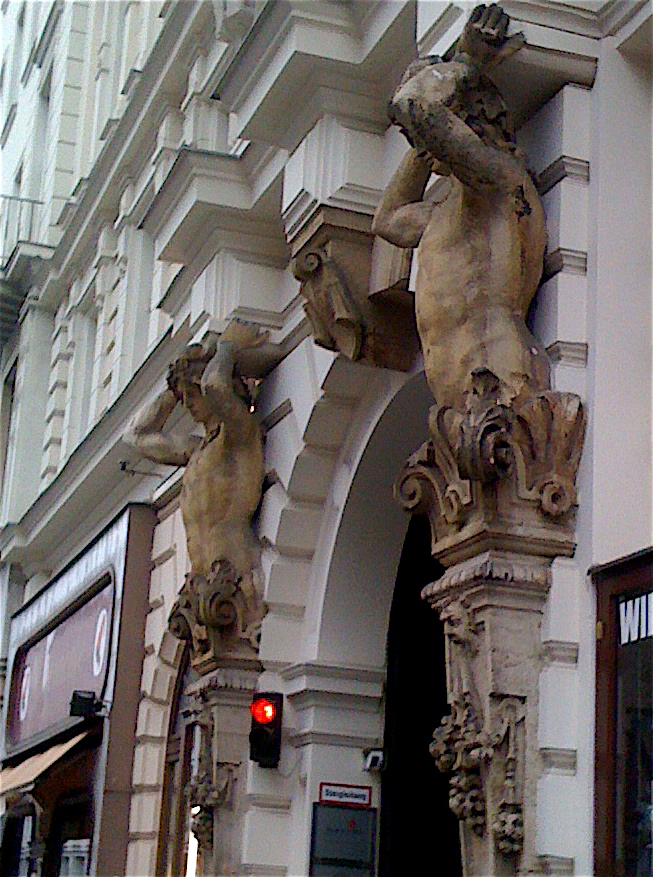
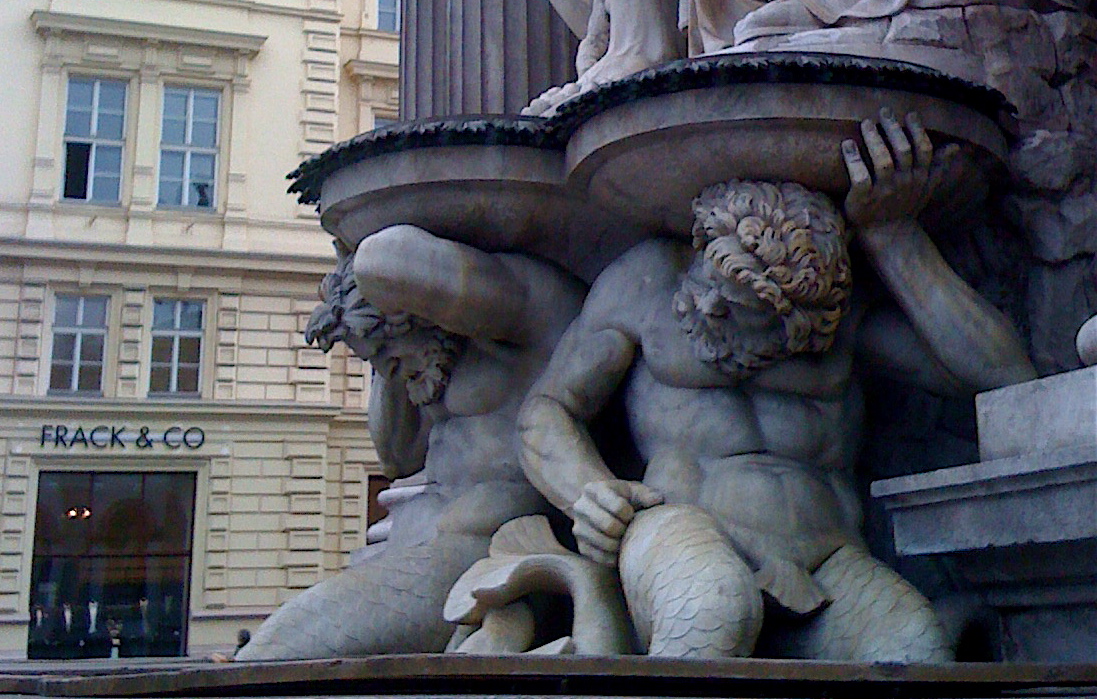
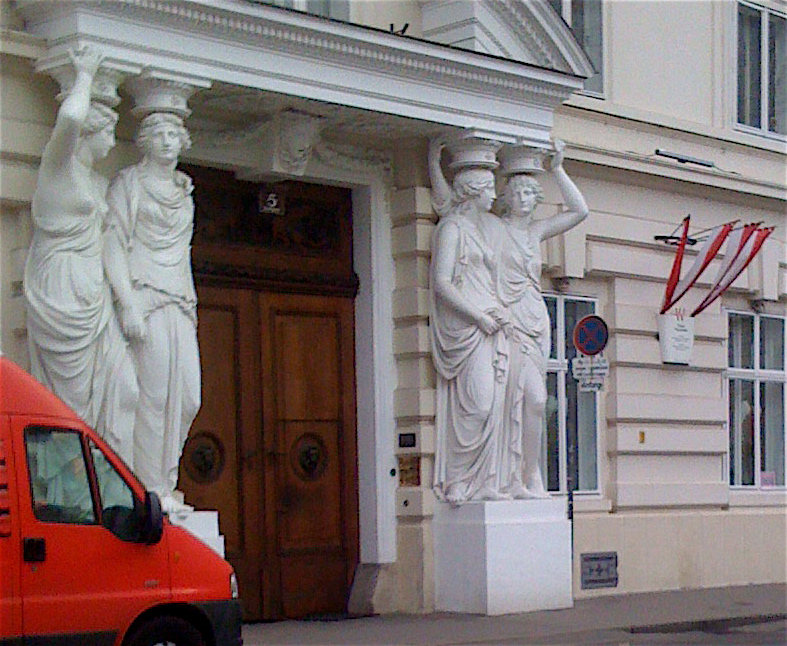
All in all, I had a marvelous time in Vienna.  It is a glorious city, steeped in culture and art. The Economist recently hailed Vienna as the city with the highest quality of life in the whole world! No one can deny that it is a great place to be. And yet, when I actually lived in Vienna in 2004, I noticed that the city also has a peculiar kind of heaviness to it.  There are so many old traditions that they can actually weigh you down.  All over the city, there are fantastic neo-classical statues in niches and fountains and columns and archways.  Very often, you will find statues of young men and women (and serpents and griffins and mermaids…) supporting the buildings of Vienna on their backs and shoulders and heads.

But if you’re strong enough to carry the weight of an Empire between your shoulder blades, then Vienna makes an unforgettable Christmas present.  🙂

From Austria with Love

In the opening scene of Puccini’s opera La Bohème, we find a couple of starving artists ( a poet and a painter) talking about life and art in their Parisian garret on Christmas Eve. They’re having some trouble paying the bills, so after a witty conversation, they decide to burn the pages of the poet’s latest play in order to keep warm.

Once again, I am living la vie bohème in Salzburg. That doesn’t mean that I’m having trouble with my central heating! But I get to be an artist among artists. I have the privilege of knowing so many talented and creative people in this city.

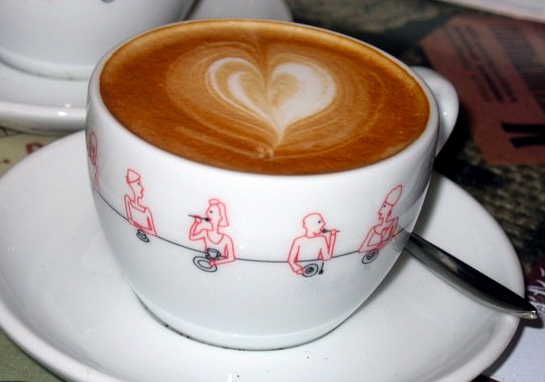
Here in our cozy Alpine flat, my friends have been hosting a lot of coffee parties, even more than usual. And it’s Christmastime, so we always have candles burning in the window and sweet treats in the kitchen.  We have had honored guests from Stockholm and Vienna, and more local friends, as well.  They all come over to discuss Life and Art over coffee or wine. Most of them are classical musicians, of course, and they tend to quote German poetry and refer to Italian operas in the same conversation, so it always feels like we’re about to burst into song, and sometimes we do.  This week, our coffee table  has become a kind of nexus for artists, where we all discuss and compare our latest creative projects. It feels a little bit like Paris in the ’20s… but for the Facebook Generation.

Of course, Salzburg is much smaller than Paris and I feel the urge to visit a larger city quite soon. Can you guess which one?  (Hint: it’s not Paris.) Stay tuned…

And while you’re pondering that, enjoy this clip from La Bohème:


Advent in Salzburg

Christmastime is one of the most beautiful times of the year to be in Austria.

It’s a lovely place in every season, but Salzburg does Advent especially well!  And that’s because, one day in mid-November, the Christmas market suddenly comes to life!

The Salzburger Christkindlmarkt (Salzburg Christmas Market) has been been open since November 17 and will continue until the day after Christmas.   It’s a little kitschy, but it’s fun! You can walk beneath the golden lights humming German Christmas carols. You can buy some hot roasted chestnuts.  You can even sip a mug of hot spiced wine (Glühwein) as you stroll from booth to booth, admiring handcrafted Christmas ornaments, woolen sweaters, Austrian crystal, baked goods, and all kinds of other wonderful Christmas gifts.

Here is a quick video clip of the marketplace tonight. It’s not my very best cinematography, but I think it will give you a sense of the ambiance:

One of the most fun musical traditions is led by Salzburg’s Tower Brass Band (Salzburger Turmbläser). Every Saturday night in Advent, at exactly 6:30 PM, the sky above Residenzplatz fills with music as the band plays Christmas carols from the rooftops.  Imagine hearing a solo trumpet play the first phrase of Silent Night from one church tower, and then being answered from across the square by a quintet of horns and trombones in another tower.  It’s a magical thing.

Now, if you really need to hear some Christmas carols played by an Austrian brass band, and yet you can’t get all the way to Austria, fear not! The city of Graz also has a tower brass band, and you can download the music of the Grazer Turmbläser on iTunes.

No matter where you are in the world tonight, I wish you a very happy Advent season!

I’ll take Passau in gold, please

Yesterday, my musical adventures took me to Passau, a charming German town near the Austrian border.

Since my itinerary is dictated by my audition and performance schedule, I was delighted to spend my Monday in such a pretty place. Passau is in a very lush corner of Bavaria, and it’s known as the “Three-River City” because it is built at the place where the Ilz and the Inn Rivers flow into the Danube.

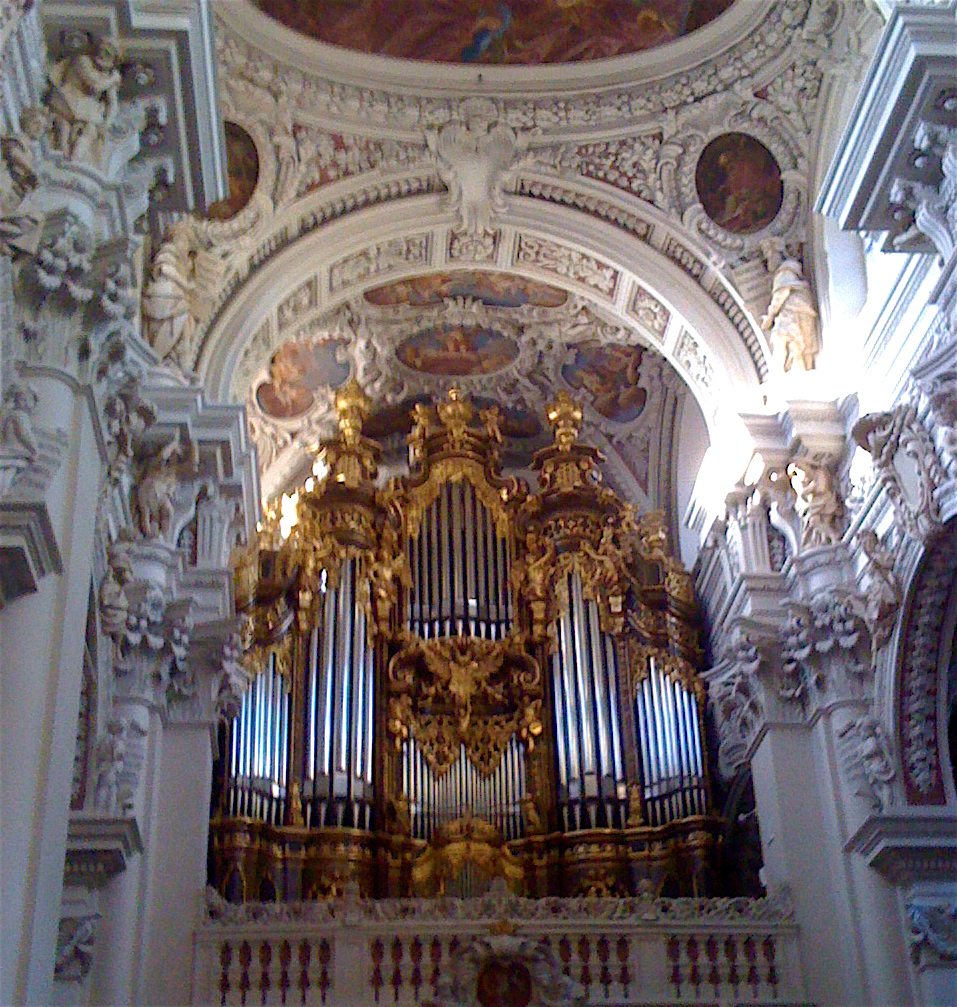
I was there to sing some Strauss. But as soon as I finished singing, I strolled over to Passau’s splendid Baroque cathedral.  Cathedral-hopping is one of my hobbies, anyway, but I was especially excited to visit St Stephan’s because it boasts the largest cathedral organ in the world. Happy happy joy joy! 🙂  

I love Baroque ornamentation, in music and in architecture.  I realize that some people cringe when they see too much gold.  You know the type — people with exquisite taste, who talk about “simple elegance” all the time? Yeah, I feel sorry for them. Personally, I like gold.  I like the sparkle of it. I understand that “not all that glitters is gold,” but when it actually is gold, I say, “relax and enjoy the glitter!” Especially if it’s in a big public space like a cathedral, where everyone can revel in it. As an opera singer, I spend a lot of my time in the 18th century, so I have no trouble with gilding. I live by the motto: when in doubt, gild it.  I don’t mind a plethora of cherubs and painted ceilings, sculpted marble and mirrored chandeliers. I might not put them in my living room, but I like to see them in church. To me, these are all signs of cheerful abundance, so my visit to Passau put me in the perfect mood for Thanksgiving week.

Traveling Diva’s Recommendations for Passau

* ACHAT Comfort Hotel– an affordable hotel that features a fitness room, sauna, jacuzzi and high speed Internet! They are opening a new hotel Budapest and I will definitely consider it for my next trip to Hungary.

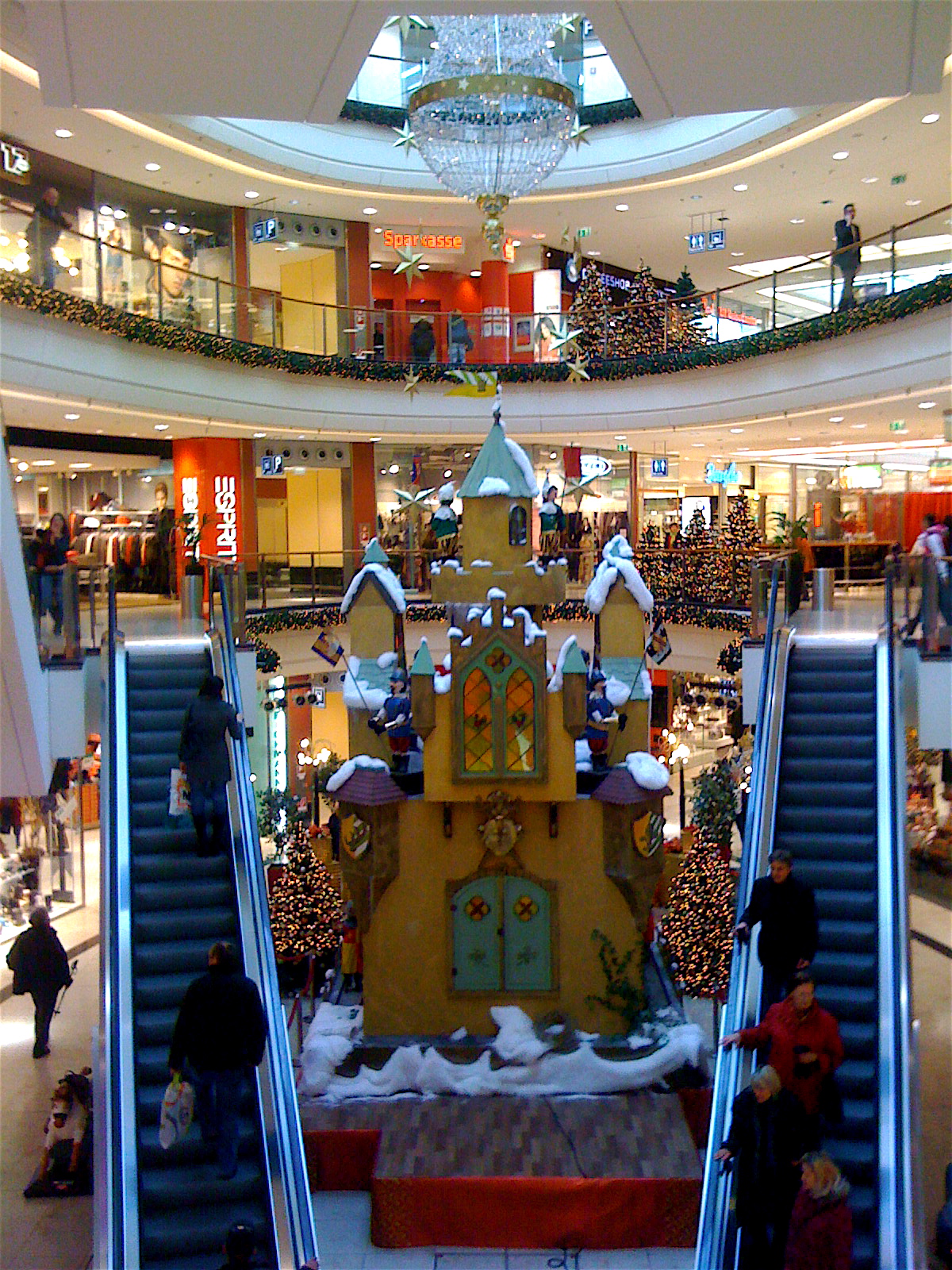
* Stadtgalerie – a centrally located shopping mall (pictured here in full Christmas décor!) where one can spend a couple of happy hours in between auditions.

* Cafe Stephan’s Dom – serves an excellent potato-pumpkin strudel on a bed of apple kraut.  However, caveat emptor: it can leave you with “cabbage breath,” a rare Teutonic condition cured only by copious amounts of peppermint. 😉

Florence for Beginners: Part III (Music, Books & Food)

How to eat, drink and be merry in Florence

So you’ve been to all of the museums and parks and now you’re thinking: where can I get something to eat around here?  Well, you’ve come to the right country. There are many culinary pleasures here.

Very often in Italy, I find that the food gets better the further you get from the city center.  The center of Florence is a touristy area and restaurants cater to an international clientele.  You will find that the food is less authentically Italian and also far more expensive than it should be. But that doesn’t mean that you can’t get good food in the center of town.  Here are a few of my favorites:

FOOD

Osteria del Cinghiale Bianco Borgo Sant’Iacopo 43r, Florence

Good traditional Florentine cuisine.

Trattoria Mamma Gina Borgo San Iacopo, 37, Florence
I like the lasagne and the desserts.

Moyo Via de Benci 23/R
If you’re looking for a big fresh salad, this is your place.

Taverna Divina Comedia Via Cimatori 7r
This café is based on the works of Dante. Very funny. I prefer the Purgatory Pizza.

ICE CREAM

You shouldn’t have trouble finding wonderful gelato in Florence. It’s everywhere. But if you’re in search of the very best ice cream, try:

Vivoli Piero Il Gelato Via Isola Delle Stinche, 7/R – near Santa Croce
–quite possibly the best gelato in Florence. Certainly the most interesting flavors. But always crowded!

runners up:

Gelateria Carabe’ Antonio Via Ricasoli, 60 – near the Duomo

La Bottega Del Gelato  Via Por S. Maria, 33/R. – near the Ponte Vecchio

So now you’ve had lunch but you also need something to read? Never fear:

BOOKS
I include bookshops for two reasons: 1) bookshops are cool and 2) bookshops have public restrooms.

Paperback Exchange (near the Duomo) – Via delle Oche, 4R

English books and good service

Feltrinelli International
Via Cavour 12-20/r (near San Marco)

Libreria Edison
Piazza della Repubblica 5

So you’ve picked up an Italian phrase book and some British paperback novel, and now you’re looking for some ear candy.  I can help:

MUSIC

Florence is the birthplace of opera.  It was a group of poets, musicians and thinkers called the Camerata who invented the art form in the late 1500s. And 400 years later, it’s still a great place to see a show!

This site gives you a bit of the history of the different theaters, as well as the famous opera festival, Maggio Musicale Fiorentino.

When I lived in Florence, I sang with Concerto Classico.  The company performs at St. Mark’s Anglican Church (Via Maggio 18), just steps away from the Ponte alle Grazie. Easy to overlook from the outside, the building houses an ornate and hauntingly beautiful chapel. The church is part of an old Medici Palace that was once owned by Machiavelli and later renovated in the neo-renaissance style. Concerto Classico offers classical concerts and full-length operas. You can get up-to-the minute information here.

Florence for Beginners: Part II (Museums & Churches)

Want to enjoy some sacred sounds? Open this LINK in a separate tab and then come right back, so that you can listen to a little Rossini as you read…

#1. DUOMO (Cathedral) and BATTISTERO (baptistery does not open until 12 PM)

Now here is a cathedral with a huge amount of floor space! I would like to sing in there someday. I’ve performed in several Florentine churches, but alas, not yet in the Duomo.

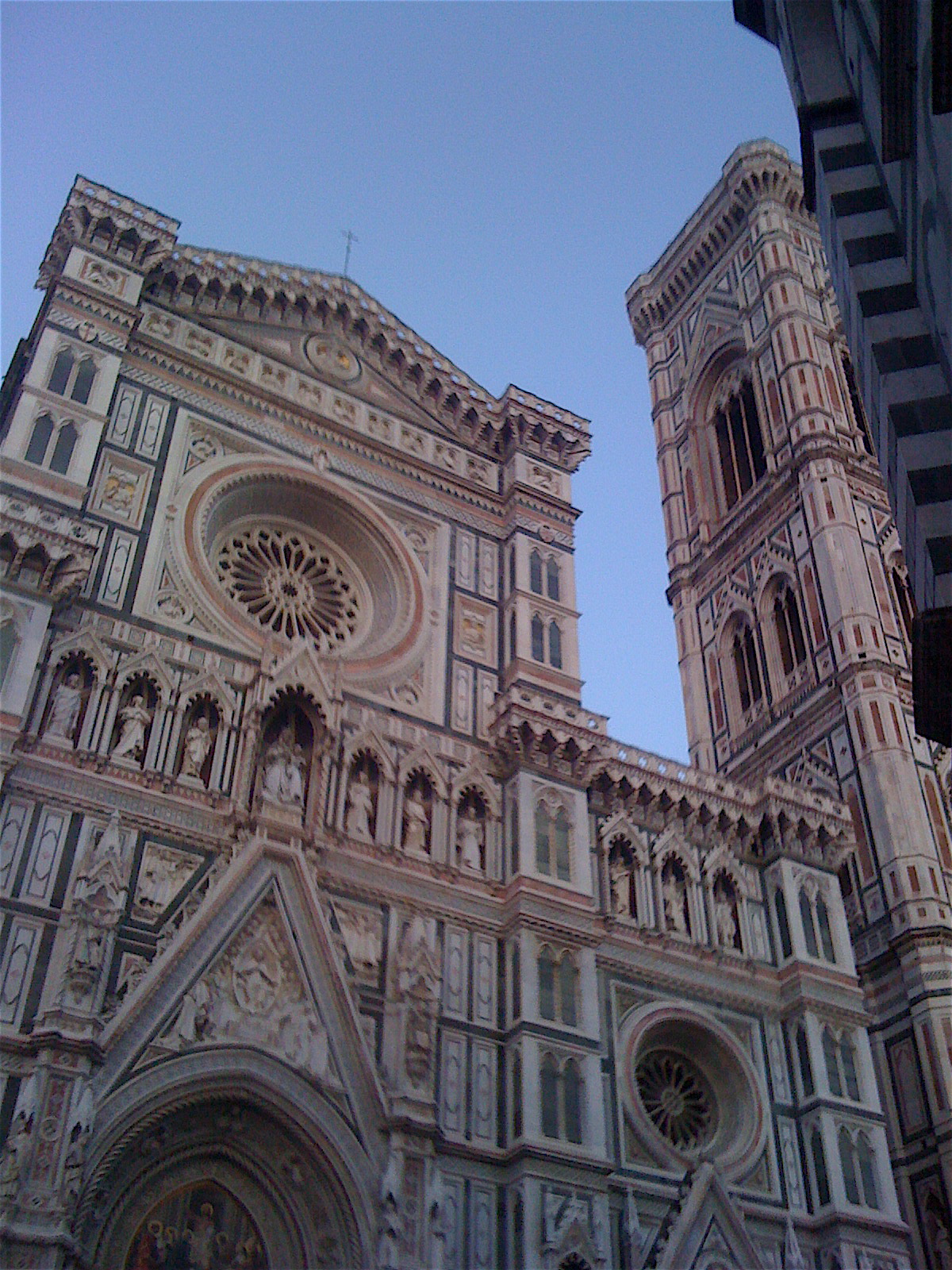
The massive dome was designed by Filippo Brunelleschi and it can be seen for miles around. But I’m more entranced by the exterior façade of sparkling polychrome marble panels in shades of green and pink bordered by white. It’s hard to describe just how cool it is, but when you see it for the first time, you may be tempted to spend all day just watching the Duomo’s façade change colors in the sunlight.

There is also a bell tower (Campanile) with a breathtaking view. I love it up there. But to access the tower, you have to be able to climb a lot of stairs while squeezed between other tourists. If that makes you queasy, stay below and take pictures.

The Bapistery’s golden doors have been grabbing headlines since 1401 when Lorenzo Ghiberti submitted them as his entry in a competition. (He won.)  Don’t you wish we still had competitions for “best bronze doors?” That might liven things up in downtown Fresno, for example.  Anyway, Ghiberti’s doors were so popular that he added another set of doors featuring imagery from the Old Testament. A younger Florentine artist called Michelangelo dubbed these the “Gates of Paradise” … and the name stuck.

Inside the Baptistery, you’ll find my favorite mosaic ceiling in the whole world. It’s hard to take your eyes off of the mesmerizing image of Christ.  But there are other surprising details to enjoy, like Abraham, Isaac and Jacob with their laps full of children (on the bottom panel beneath Christ’s right hand)!

#2. THE UFFIZI MUSEUM  is a must-see for any art-lover! I had a club membership to the Uffizi when I lived in Florence, so that I could focus on a different room every day. But if you don’t have several weeks to enjoy the Uffizi, you’ll want to order your tickets ahead of time. You will be assigned a specific time to see the museum; it’s better to request an early arrival (9:30 or 10 AM) to avoid the crowds. I have used this website: Weekend a Firenze.

There is an additional handling fee for this service, but it is more than worth the money. So many people freak out when they see the line of tourists standing outside the Uffizi; in their panic, they miss what could be a once-in-a-lifetime chance to see the Birth of Venus and the Sacra Famiglia in person. There will be a throng of restless people who have been waiting outside the museum since dawn, but you can squeeze past them and use your confirmation number to pick up your pre-ordered tickets at the glass counter.

The gift shops are on the first floor and the museum is on the second floor. (There is a mezzanine floor with sketches, but most people skip it.) Most tourists take the stairs, but you can ask for the elevator. There are 45 rooms in the Uffizi, so be sure to take lots of breaks, and don’t worry about skipping some rooms if you’re tired. It’s impossible to memorize the entire museum in one day, and you’ll have a happier experience if you spend 20 minutes resting on the benches in the Botticelli room, trying to decide which of his paintings is more perfect, Primavera or The Madonna of the Magnificat?

The Uffizi Cafe has a great view of the Palazzo Vecchio and the Piazza della Signoria. The prices for coffee and cake are exhorbitant, but again, it’s worth the money. The museum is shaped like a U and tourists usually move in the same direction, so that the cafe is at the VERY END OF THE TRACK before you go back downstairs. Don’t wait until the end, especially if you are traveling with younger art lovers, because the kids will need sustenance! When you are getting drenched in Italian art, you need some fluffy cake to absorb all that genius. So after you have seen the first half of the museum (medieval stuff, Botticelli, Da Vinci, etc.), skip ahead to the cafe and take a break; then you’ll all be refreshed enough to enjoy the second half of the museum (Michelangelo, Rafael, Tintoretto, etc.)

#3. THE CHURCH OF SANTA CROCE

The Basilica di Santa Croce (Basilica of the Holy Cross) is the principal Franciscan church in Florence. You will find some amazing works of art there, both inside the church and in its adjoining cloisters.

You have to buy a ticket to get inside, but Santa Croce is still a true place of worship. It is also the burial place of some famous guys like Michelangelo, Galileo, Machiavelli and Rossini. I attended St James Episcopal when I lived in Florence, but whenever I went to mass at Santa Croce, I would always sit “next to Rossini” in church, by choosing the pew next to his memorial.

If you’re not so interested in all the art and you simply need a good place to pray, just whisper “per preghiere” to one of the guards at the side door and he will show you a peaceful side chapel with candles. You cannot access the rest of the church from here. But in the middle of all of Florence’s noise, this is one place where you can just be still for a minute.

#4. PALAZZO PITTI

The Pitti Palace is a vast mainly Renaissance palace in Florence, situated on the south side of the Arno, a short distance from the Ponte Vecchio. It is a treasure house as various generations amassed paintings, silver, porcelain, jewelery and other luxurious stuff.

This is a good place for families because you can split up into 3 groups: 1) museum group 2) group that sits in the sunshine, eating ice cream in front of the palace 3) group that wanders through the gardens.

Kids usually enjoy the Boboli Gardens (attached to the Palace with a separate ticket fee), because they can run around on the little garden trails and in the big amphitheater.  Adults like it because they can take photos that make all their friends jealous when they upload them to Facebook – there are some amazing backdrops here.

#5. THE ACCADEMIA

This is where you can find Michelangelo’s famous statue of  David. (You will see copies of him in other places in Florence, but he looks even better inside.) But David is not alone in there. Going to the Accademia gives you a chance to meet some of Michelangelo’s unfinished statues, which are also very powerful. Once again, you will want to buy your tickets ahead of time to avoid the long line!

6. MUSEO SAN MARCO

If you’re into late medieval scandals (and who isn’t?), this where Girlamo Savonarola (the Dominican mystic & political reformer) ran his monastery. Each monk’s cell features a different fresco by Fra Angelico.

Other favorite churches & museums (if you have time) include:

7. Medici Chapels
8. Medici Riccardi Palace
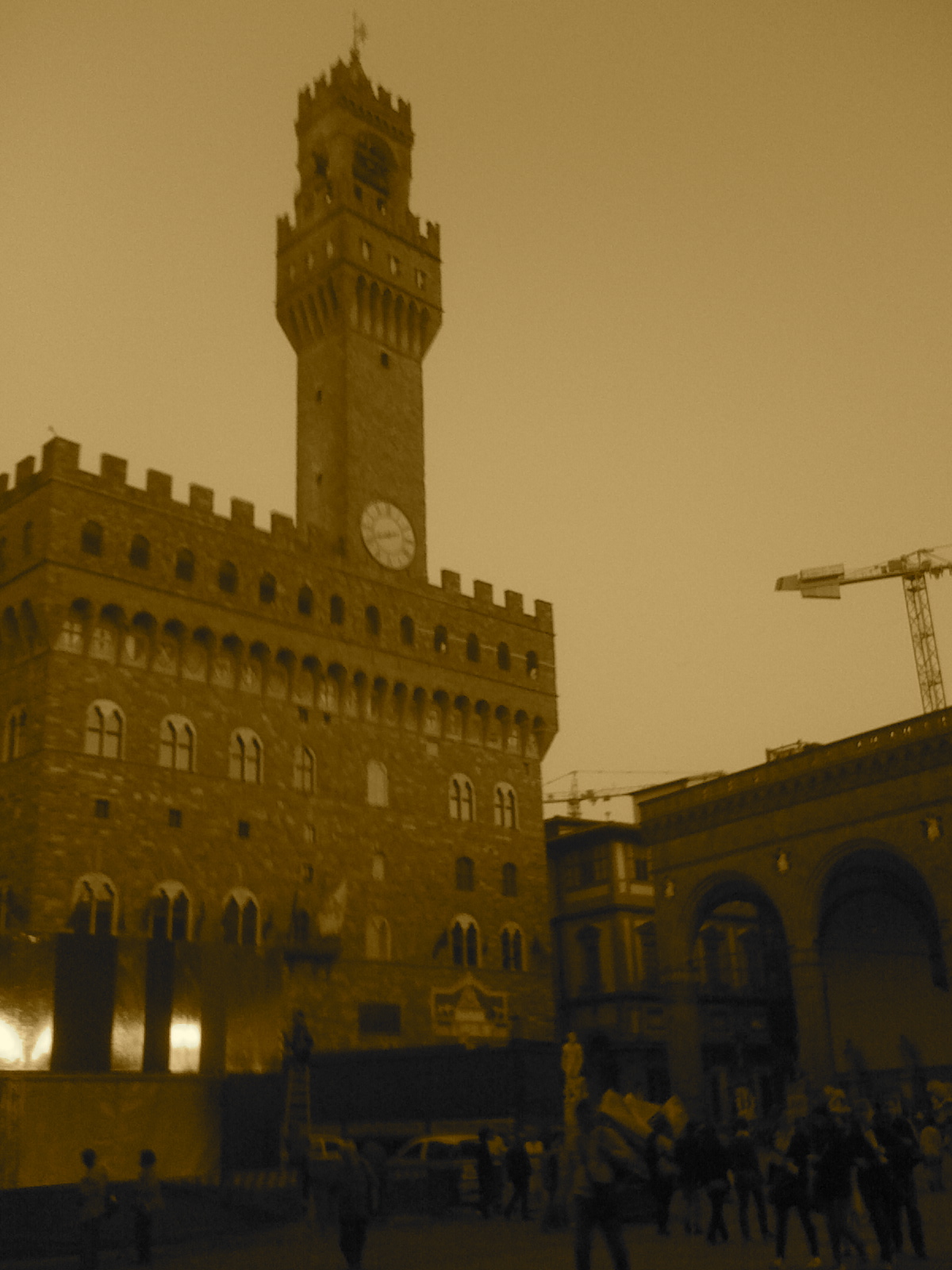
9. Palazzo Vecchio
10. Church of Santa Maria Novella
11. Chapel Brancacci – try to catch the film about 15th century Florence
12. Bargello National Museum
13. Museum of History and Science
14. Dante Museum

…and many, many more!
Florence for Beginners: Part I (parks & piazzas)

I lived in Florence for almost 2 years, I am often asked for tips.  And I thought it would be fun to share those with all of you. So here’s the first installment of Lindsay’s Guide to Florence.

I recommend that you open this LINK in a separate tab and then return immediately to this page, so that you can listen to Puccini while you read this post.

Piazza della Signoria  used to be the political center of medieval Florence, and it’s my favorite piazza in the whole city. It is especially beautiful early in the morning (when it’s quiet and bright) or late in the afternoon (when the sunlight makes shadows on the old Palazzo Vecchio.) There is a great fountain featuring a very cranky-looking statue of Neptune and some long-necked nymphs. The Uffizi is on the south side, towards the Arno River. The Piazza is dominated by the Loggia dei Lanzi, with a Gothic roof that covers 15 statues (including Perseus holding up the head of the Medusa, which is fun.) If it’s a hot day, you can climb up into the loggia and sit in the shade next to some beautiful statues, although there are strict policemen who will keep you from eating anything in there. (The Uffizi Café is on the roof of the Loggia but is only accessible from the museum). Theoretically, someone could toss down a piece of very expensive cake for you to eat inside the loggia, but it would probably be intercepted by one of the aforementioned policemen, so be good and don’t eat near the art.

Piazza della Repubblica was once the city’s forum, and then the city’s marketplace. Now, it’s a good place to find a post office or a bookstore! There’s a carousel in the center of the square, which is fun for kids. The Giubbe Rosse cafe has been a meeting place for famous artists and writers, and the square still has a bohemian feeling at night. There are often musicians busking in this piazza and aspiring artists making impressive chalk drawings on the ground.

Piazza Santa Croce is another lovely square facing the church of Santa Croce. Note the big statue of Dante outside the church, if it’s not still under scaffolding. I used to meet my friends next to the statue’s pedastal, just so that we could say, “Let’s meet at the foot of Dante.”  But this once backfired on me – when I arrived at Dante, the square was full of protesters.  Not the best meeting place, after all, if the Florentines happen to be on strike.

The Piazzale Michelangelo overlooks one of the most famous cityscapes in the world. Sometimes, brides and grooms will stop here to have their picture taken in front of the Florentine skyline. There is also a café nearby with good banana splits! But the walk up the hill is a steep one – try to find a bus unless you want some real exercise.

Piazza Santo Spirito was once an open-air theatre for the monks to preach, but it’s been used more recently for rock concerts and flea markets. It’s the “hip” part of the city, full of pubs and parties on a Saturday night. As I recall, part of the church dates back to the 14th Century. I used to sit on the steps of that church with my friends – we formed a group called the Zanzara Artists Network that is still making beautiful art today.

Piazza Santa Maria Novella is near the train station, just outside the Church of Santa Maria Novella. There are some lovely benches near a fountain. Beware of hungry pigeons.

PARKS & GARDENS

There is a lovely green park on the north side of the Arno, up by the Ponte San Niccolo. It’s very romantic. One sun-drenched Italian afternoon, a young man proposed marriage to me in that park. (I said no. Mostly because I’d only just met him. But parks can be very romantic.)

List of great gardens open to the public in and around Florence:

1. Boboli Garden (my favorite, great labyrinthine place behind the Palazzo Pitti with good views of the city)

2. Botanical Gardens
3. The Garden of Palazzo Medici Riccardi
4. Giardino dell’Orticultura
5. The Garden at Villa della Petraia
6. The Garden at Villa di Castello

SAFETY TIPS: While walking around Florence, be aware that street vendors and poll takers will approach you on the street and ask you for money/food/signatures, etc., in a variety of languages. Be friendly but firm, and don’t let them harass you. If you are in a crowded area, stop making eye contact and stare at people’s hands – the pickpockets will try to distract you, but it’s very hard for them to steal without using their hands! When crossing the street, listen for vespas (motorcycles) that are speeding around the city at record speeds – you will hear them before you see them. And if all that motorbike noise is irritating you, seek refuge in a restaurant or a park.

An Afternoon of Opera, Cathedrals & Bratwurst

More adventures in Munich…

I had an audition in Munich today, so I hopped across the border to Germany with another Bayern-Ticket.

My audition was right in the heart of Munich’s Old Town, not far from the famous Frauenkirche (Dom zu unserer lieben Frau, “Cathedral of Our Dear Lady”). So when I finished singing, I decided to stop by the church for a visit.  The Gothic brick facade and the Byzantine domed towers are just so inviting!

I’m a big fan of European cathedrals, so I spent an hour wandering up and down the expansive nave, peaking into candlelit chapels, and admiring medieval artwork.  A beautiful way to spend an afternoon.

As I was leaving, I was amused to learn that the Frauenkirche now has its own iPhone app! For €3.99, it gives you all kinds of details about the art inside the cathedral; in fact, iTunes offers this “artguide” for several important German churches.  I was tempted to download it, but I had a train to catch.

When I finally arrived back at the Hauptbahnhof, I realized that I had forgotten to eat lunch. Sometimes, after singing German opera, I crave protein. (As opposed to after singing Italian opera, when I find myself ordering gnocchi.) Instead of sitting down at a restaurant, I stopped at a German sausage stand. After all, Munich is known for its excellent bratwurst.

In general, the sausage is served along with a Kaiser roll and a blob of spicy mustard on a tiny paper plate.  But this time, it came without the plate.  My bratwurst was perched on a thin paper napkin.

Balancing a sausage on a napkin can be a little awkward, especially if you are wearing something nice … like an audition outfit. I know that we live in a world where billionaires wear jeans to work. But in opera, even starving artists try to dress beautifully. We represent an elegant art form where taste and style are part of the job description. So spilling mustard on your dress is really frowned upon!

Fortunately,  I avoided catastrophe with nothing more serious than a few crumbs of Kaiser roll on the sleeve of my coat;  I tried to brush them off with dignity. And I still managed to catch my train.  So it was a good day, after all. Tschüß!

that autumn feeling

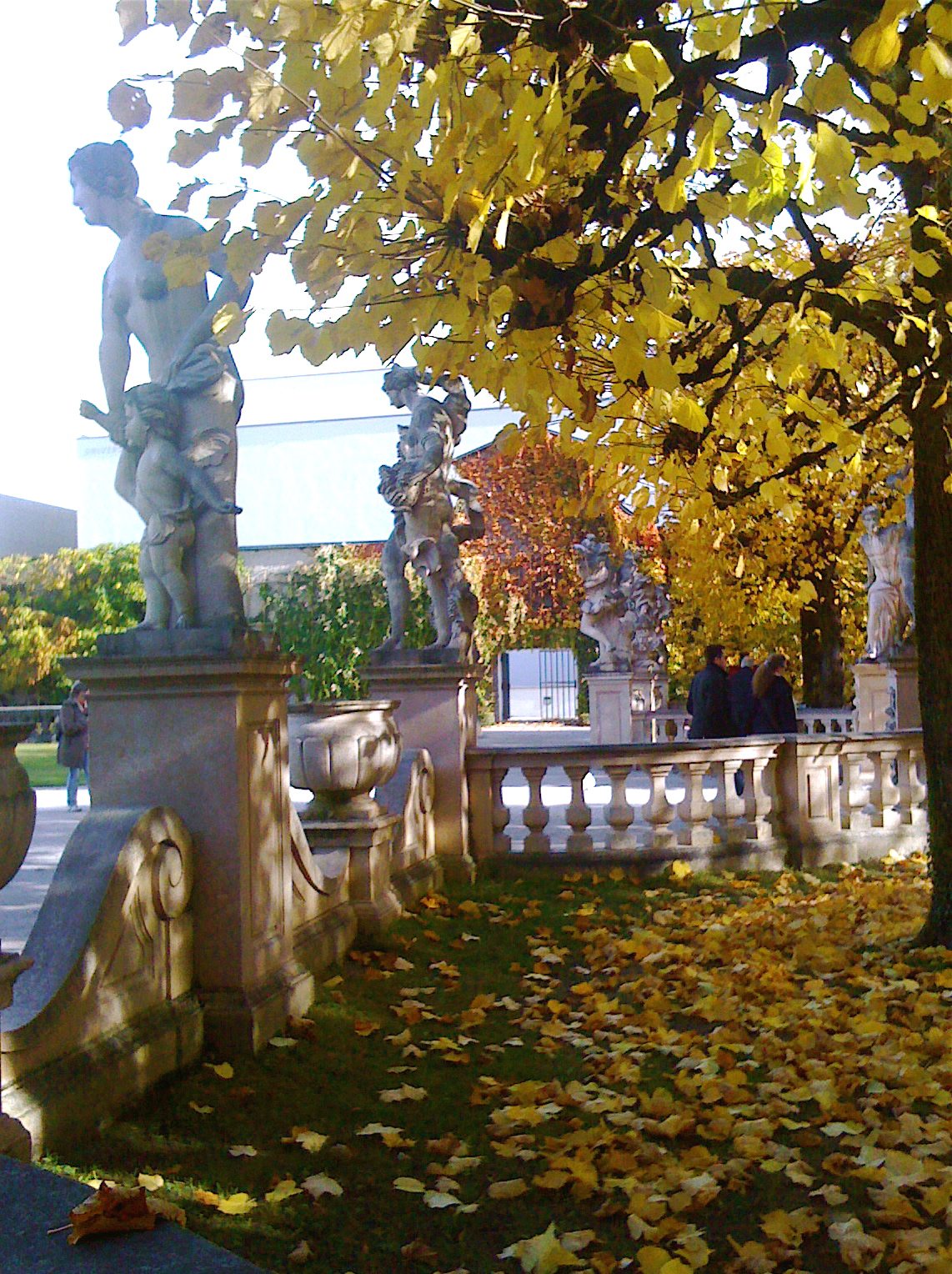
Autumn has arrived in Salzburg. You cannot walk through Mirabell Garden without hearing the crunch of red and gold leaves underfoot!

I keep thinking about my favorite fall poems, the ones in English by Donne and Dickinson, and the ones in German by Rilke and Trakl.

And then there are the ageless songs of autumn, like September and Im Herbst … and Autumn in New York.  😉

Since I was once a college student here in Salzburg, that music always reminds me of past autumns in Austria. In fact, it’s sometimes hard to separate the memories from the music. In her wonderful book, The Inner Voice, Renée Fleming describes this phenomenon: “I have lived a life with a soundtrack. So many of my memories have music attached to them.”

And I know just what she means. I would take it even one step further.  Not only do my memories contain a soundtrack, but certain playlists seem to contain my memories!  When I hear a song that I love, I often remember where I was when I first heard it, and what was happening in my life at the time. It feels like my own story is written into the harmony.

The most vivid memories come from arias that I have studied or performed.  After all, learning a piece of music is a very personal experience, and hearing the music again reminds me of that experience – I can usually remember singing the piece for the very first time. I remember the people who were there, and what was happening, and what was said. When you live so closely with music, listening to a song can be like re-reading your own diary.

It’s a little dangerous to live this way, with some of your most personal feelings tied up in standard repertoire.  It means that you can walk into any concert hall and get knocked off your feet by a couple of measures of music. A well-placed chord is a powerful thing, and a single arpeggio can reduce me to tears. The pianist finishes some rich, luxuriant passage and I want to say: “You had me at the G minor sixth chord.”

Oh, the nostalgia. Of course, autumn isn’t just about memories.  There is always fresh new music to sing! And there is much to be excited about this fall. May audition season begin!